Architecture
Art Nouveau architecture in Riga
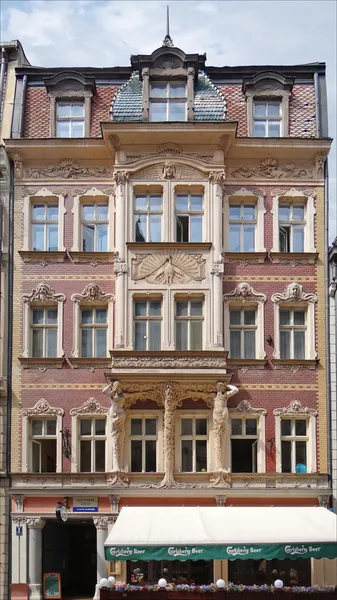
Art Nouveau architecture in Riga is a prominent part of the architectural heritage of the capital of Latvia, and makes up roughly one third of all the buildings in the centre of Riga. Built during a period of rapid economic growth, most of Riga's Art Nouveau buildings date from between 1904 and 1914. The style is most commonly represented in multi-storey apartment buildings. Stylistic influences derived not least from present-day Austria, Finland and Germany, while the establishment of a faculty of architecture in Riga in 1869 was instrumental in providing a local cadre of architects. This included, but was not limited to, some of the first formally trained ethnic Latvian architects. As elsewhere, the Art Nouveau movement in Riga was driven by a desire to express greater individuality, local attachment and a more rational kind of architecture than that which had dominated during the 19th century. Stylistically, the Art Nouveau architecture of Riga can be further divided into four different stages: Eclectic, Perpendicular, National Romantic; and Neo-Classical.
Also on this shelf
Albrechtsberg Palace (Dresden).
Consulate General of the United States, Munich.
See also
- ▸Ciutadella de Menorca Cathedral
- ▸History of nudity
- ▸Cathedral Santuario de Guadalupe (Dallas, Texas)
Text from Wikipedia; plate via Wikimedia Commons. Text CC BY-SA 4.0; plate freely licensed (see Commons). Source record. Images and catalogue data are reproduced from open-access collections.