Architecture
Alcázar of Seville
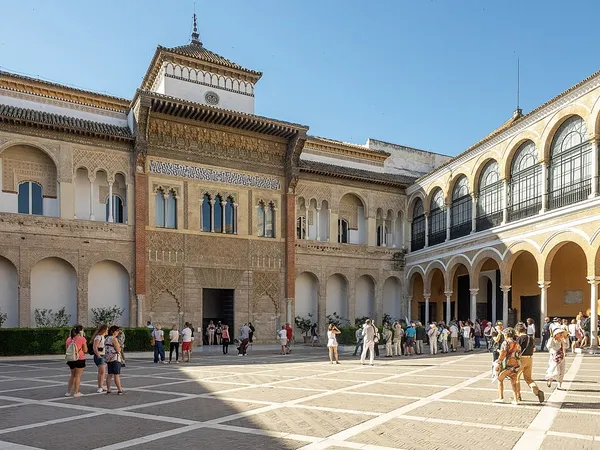
The Alcázar of Seville, officially called Royal Alcázar of Seville (Spanish: Real Alcázar de Sevilla or Reales Alcázares de Sevilla), is a historic royal palace in Seville, Spain and one of the official residences of the Spanish royal family. It was formerly the site of the Islamic-era citadel of the city, begun in the 10th century under the Umayyads and then developed into a larger palace complex by the Abbadid dynasty (11th century) and the Almohads (12th to early 13th centuries). After the Castilian conquest of the city in 1248, the site was progressively rebuilt and replaced by new palaces and gardens. Among the most important of these is a richly decorated Mudéjar-style palace built by Pedro I during the 1360s. The palace is a preeminent example of Mudéjar style in the Iberian Peninsula and also includes sections with Gothic and Renaissance elements. The upper storeys of the Alcázar are still occupied by the royal family when they visit Seville and are administered by the Patrimonio Nacional. It was registered in 1987 by UNESCO as a World Heritage Site, along with the adjoining Seville Cathedral and the General Archive of the Indies.
Also on this shelf
Archdiocese of Valencia in Spain.
Byzantine Empire under the Angelos dynasty.
See also
Uncatalogued shelfText from Wikipedia; plate via Wikimedia Commons. Text CC BY-SA 4.0; plate freely licensed (see Commons). Source record. Images and catalogue data are reproduced from open-access collections.