Architecture
Architecture of Albany, New York
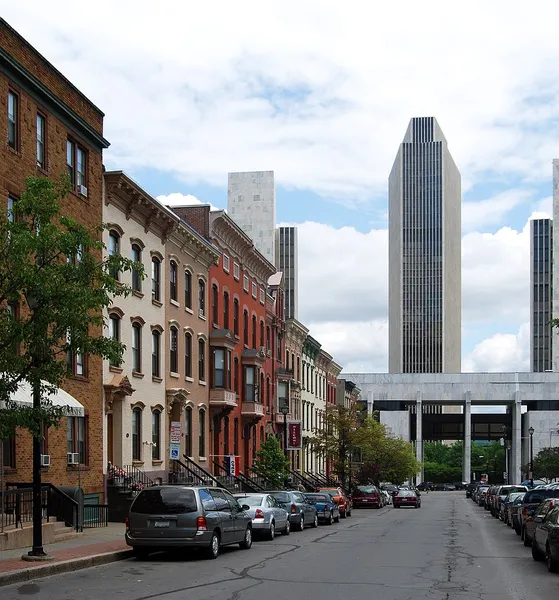
The architecture of Albany, New York, embraces a variety of architectural styles ranging from the early 18th century to the present. The city's roots date from the early 17th century and few buildings survive from that era or from the 18th and early 19th century. The completion of the Erie Canal in 1825 triggered a building boom, which continued until the Great Depression and the suburbanization of the area afterward. This accounts for much of the construction in the city's urban core along the Hudson River. Since then most construction has been largely residential, as the city spread out to its current boundaries, although there have been some large government building complexes in the modernist style, such as Empire State Plaza, which includes the Erastus Corning Tower, the tallest building in New York outside of New York City. Owing to Albany's status as New York's state capital, many of its most architecturally notable buildings are government buildings, such as the state capitol and city hall. The city also boasts many prominent churches, such as All Saints and Immaculate Conception cathedrals, the diocesan seats of the Episcopal and Roman Catholic churches respectively. Downtown has some prominent commercial buildings like the former headquarters of the Delaware and Hudson Railroad, now the SUNY System Administration Building, another symbol of the city. The bulk of the city's historic architecture, however, are its many rowhouses, homes to residents of both affluent neighborhoods like Center Square and poorer areas like Arbor Hill. Architects of national stature represented among Albany's buildings include Philip Hooker, Patrick Keely, Andrew Jackson Downing and Calvert Vaux, Richard Upjohn and his son, Henry Hobson Richardson, and Stanford White. In their capacity as New York's state architect, Isaac Perry and Lewis Pilcher did significant work. Two architects who practiced locally, Marcus T. Reynolds and Albert Fuller, contributed many important early 20th-century buildings. Much of the city's important architecture has been recognized in the city's listings on the National Register of Historic Places, either individually or as contributing properties to its 14 historic districts. All but two of the other 48 extant properties listed are buildings. Three—the state capitol, St.
Also on this shelf
Annunciation Monastery (University of Mary).
Frederiksberg Allé.
See also
Uncatalogued shelfText from Wikipedia; plate via Wikimedia Commons. Text CC BY-SA 4.0; plate freely licensed (see Commons). Source record. Images and catalogue data are reproduced from open-access collections.