Architecture
Architecture of Sudan
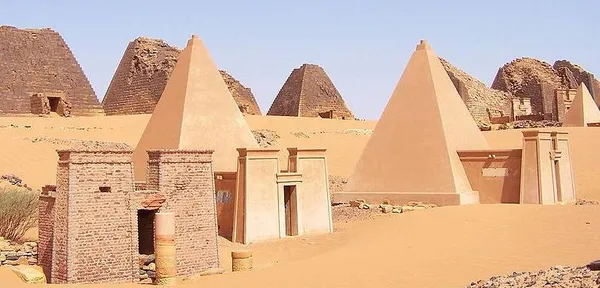
The architecture of Sudan mirrors the geographical, ethnic and cultural diversity of the country and its historical periods. The lifestyles and material culture expressed in human settlements, their architecture and economic activities have been shaped by different regional and environmental conditions. In its long documented history, Sudan has been a land of changing and diverse forms of human civilization with important influences from foreign cultures. The earliest known architectural structures and urbanization go back to the eighth millennium BCE. Cultural relations with Sudan's northern neighbour of Ancient Egypt, with which it shared long historical periods of mutual influence, brought about both Egyptian as well as distinctly Nubian settlements with temples and pyramids that emerged in the Kingdom of Kush and its last capital of Meroë. From around 500 CE until circa 1500 CE, Christian kingdoms were thriving in Upper Nubia and southwards along the Nile. They built important cities, known by their flourishing culture, with monasteries, palaces and cities with fortifications and cathedrals, showing influences of Coptic and Byzantine cultures from Egypt and the eastern Mediterranean. Following the growing influence of Arab Muslim migrants from the 7th century onwards, the Christian kingdom of Makuria established the Baqt, a treaty with the Muslim rulers of Egypt allowing Muslims to freely trade and travel. This bought about the first establishment of mosques and cemeteries in Upper Nubia, documented from 1317 CE onwards. From about 1500 CE and up to the early 19th century, the Muslim Sultanates of the Funji and of Darfur established new kingdoms in the southern and western parts of Sudan. Prosperous cities such as Sennar or Al Fashir had buildings for administration and personal housing, agriculture and crafts, worship and trade, - including the slave trade. Located on the southern bank of the Blue Nile, the city of Khartoum developed as the centre of the Turkish-Egyptian state, but was largely destroyed by the Mahdi's followers in 1885, who established their capital in Omdurman across the White Nile. In the early 1900s, Khartoum, was rebuilt by the British administration under Lord Kitchener, following standards of a modern European city.
Also on this shelf
Heysel Plateau.
Arts Building (McGill University).
See also
Uncatalogued shelfText from Wikipedia; plate via Wikimedia Commons. Text CC BY-SA 4.0; plate freely licensed (see Commons). Source record. Images and catalogue data are reproduced from open-access collections.