Architecture
False front
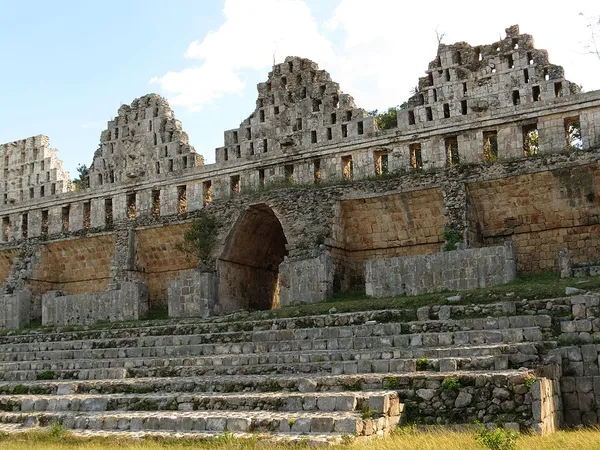
In architecture, the false front (also false facade, flying facade, screen wall) is a facade designed to disguise the true characteristics of a building, usually to beautify it. The architectural design and purposes of these wall-like features vary: making a building appear larger, more important, and better-built, like in the Western false front architecture, German Blendfassaden (lit. 'blind facades') or Brick Gothic main facades (Schaufassaden, lit. 'show facades'). Some sources also use the term screen facade (German: Schirmfassade) when discussing the Medieval and Renaissance churches, not to be confused with the modern "membrane" screen facade; creating a fake appearance to improve aesthetics, an architectural equivalent of trompe-l'oeil; in facadism, keeping the old facades with the goal of preserving the visual character of a historical neighborhood while allowing an entirely modern design of the actual buildings. In the view of preservationists, this creates a "Disneyland of false fronts"; deliberate violation of the truth to materials principle ("false in material") for economical, insulation, or aesthetic purposes, like masonry veneer using a non-structural outer layer of stone or a membrane screen facade; hiding a gable roof, like a tall parapet wall, as opposed to cross-sectional facade; a purely decorative way to increase height, like the one of a roof comb, a flat structure that tops buildings in Mesoamerican architecture. Sometimes the comb was shifted from the center of the roof to one of the walls, forming a flying facade. Tradition of "show facades" goes back to the very beginnings of the architecture, when the simplest buildings might have just one opening serving both as a door and a window. The special role of the wall with this opening was stressed through articulation and decoration. Outside of architecture, "false front" is used to describe a deceptive outward appearance in general, false hair in front (like bangs). In cabinetry, false drawer fronts give sink cabinets the appearance of having drawers (for aesthetical reasons) where the sink and plumbing leave insufficient space for them.
Also on this shelf
Caracas Cathedral.
Cathedral of Learning.
See also
Uncatalogued shelfText from Wikipedia; plate via Wikimedia Commons. Text CC BY-SA 4.0; plate freely licensed (see Commons). Source record. Images and catalogue data are reproduced from open-access collections.