Architecture
Renaissance Revival architecture
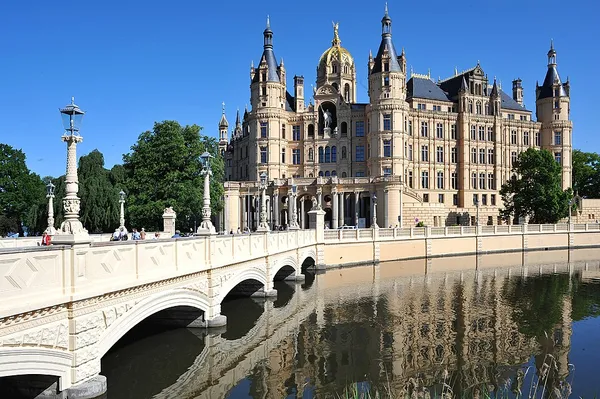
Renaissance Revival architecture (also referred to as "Neo-Renaissance") is a group of 19th-century architectural revival styles which were neither Greek Revival nor Gothic Revival but which instead drew inspiration from a wide range of Renaissance architecture modes. Under the broad designation Renaissance architecture 19th-century architects and critics went beyond the architectural style which began in Florence and Central Italy in the early 15th century as an expression of Renaissance humanism; they also included styles that can be identified as Mannerist. Self-applied style designations were rife in the mid- and later 19th century: "Neo-Renaissance" might be applied by contemporaries to structures that others called "Italianate", or when many French Baroque features are present (Second Empire). The divergent forms of Renaissance architecture in different parts of Europe, particularly in France and Italy, has added to the difficulty of defining and recognizing Neo-Renaissance architecture. A comparison between the breadth of its source material, such as the English Wollaton Hall, Italian Palazzo Pitti, the French Château de Chambord, and the Russian Palace of Facets—all deemed "Renaissance"—illustrates the variety of appearances the same architectural label can take.
Also on this shelf
Cathedral of Our Lady (Antwerp).
Gumaca Cathedral.
See also
Uncatalogued shelfText from Wikipedia; plate via Wikimedia Commons. Text CC BY-SA 4.0; plate freely licensed (see Commons). Source record. Images and catalogue data are reproduced from open-access collections.