Architecture
Gardens of the French Renaissance
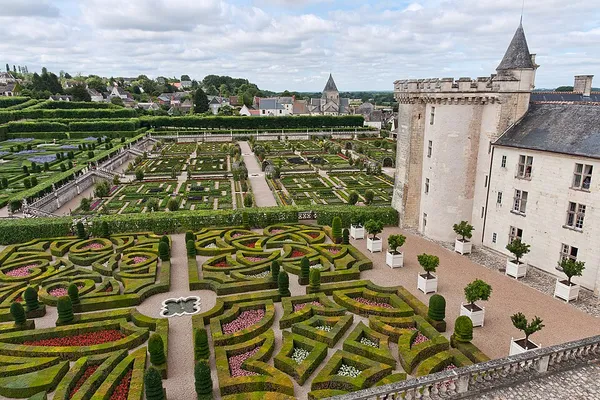
Gardens of the French Renaissance were initially inspired by the Italian Renaissance garden, which evolved later into the grander and more formal jardin à la française during the reign of Louis XIV, by the middle of the 17th century. In 1495, King Charles VIII and his nobles brought the Renaissance style back to France after their war campaign in Italy. They reached their peak in the gardens of the royal Château de Fontainebleau, Château d'Amboise, Château de Blois, and Château de Chenonceau. French Renaissance gardens were characterized by symmetrical and geometric planting beds or parterres, plants in pots, paths of gravel and sand, terraces, stairways and ramps, moving water in the form of canals, cascades and monumental fountains, and extensive use of artificial grottoes, labyrinths, and statues of mythological figures. They became an extension of the châteaux that they surrounded, and were designed to illustrate the Renaissance ideals of measure and proportion, and to remind viewers of the virtues of Ancient Rome.
Also on this shelf
Cultural landscape.
16th arrondissement of Paris.
See also
Uncatalogued shelfText from Wikipedia; plate via Wikimedia Commons. Text CC BY-SA 4.0; plate freely licensed (see Commons). Source record. Images and catalogue data are reproduced from open-access collections.