Architecture
Architecture of Melbourne
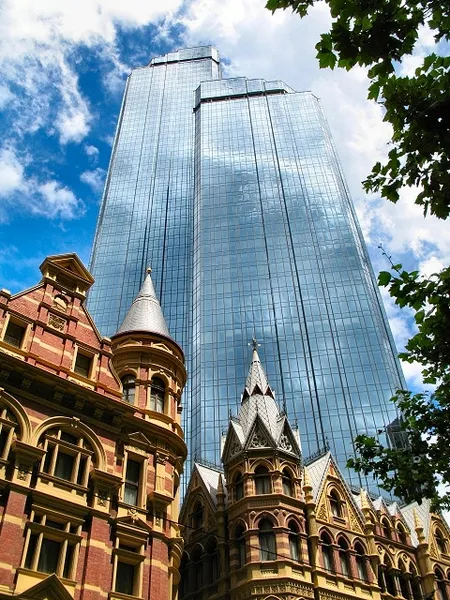
The architecture of Melbourne, Victoria, Australia, is characterised by a wide variety of styles. The city is particularly noted for its mix of Victorian architecture and contemporary buildings, with 79 skyscrapers (buildings 150 metres or taller) completed or topped-out, the most of any city in Australia. In the wake of the 1850s Victoria gold rush, Melbourne entered a lengthy boom period that culminated in the real-estate bubble of the 1880s and early 1890s. This saw the construction of a large amount of ornate, High Victorian Boom style buildings in the city centre. Melbourne's skyline subsequently transformed, becoming the first early skyscraper city outside the United States; architectural historian Miles Lewis describes Melbourne of the period as a "Queen Anne Chicago". Melbourne at this time was also second only to London as the largest and wealthiest city in the British Empire, and earned the still-quoted moniker "Marvellous Melbourne", coined by English journalist George Augustus Sala while visiting in 1885. The affluence of the period is reflected in many surviving buildings, including the Royal Exhibition Building, Australia's first UNESCO World Heritage registered building. Beyond the city centre, suburbs arose and became peppered with mansions, villas and terraces with iron lace verandahs, and many suburbs developed bustling main streets, leaving a substantial architectural legacy. Following a financial collapse in the early 1890s, Melbourne's growth returned by the early 20th century, and continued at a more modest pace in the following decades. The Federation period of 1900–1915 saw a new crop of commercial buildings in the city centre; concerns about the likely congestion caused by skyscraper development and the influence of the City Beautiful movement saw a 132 feet (40 metres) height limit introduced in 1916 (which still allowed for ornamental towers). Suburban development of detached houses continued, in the new red brick Federation style. After the restrictions of World War I, development again resumed, with American influences now evident, such as Stripped Classical office buildings, and Californian Bungalow houses.
Also on this shelf
Cathedral of Saint Theresa of Lisieux.
Architecture of Canada.
See also
Uncatalogued shelfText from Wikipedia; plate via Wikimedia Commons. Text CC BY-SA 4.0; plate freely licensed (see Commons). Source record. Images and catalogue data are reproduced from open-access collections.