Architecture
Etruscan architecture
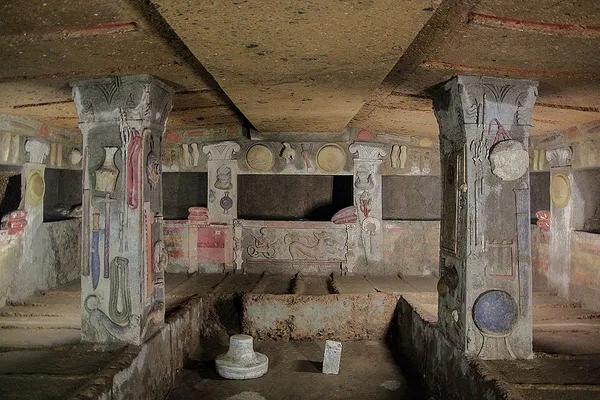
Etruscan architecture was created between about 900 BC and 27 BC, when the expanding civilization of ancient Rome finally absorbed Etruscan civilization. The Etruscans were considerable builders in stone, wood and other materials of temples, houses, tombs and city walls, as well as bridges and roads. The only structures remaining in quantity in anything like their original condition are tombs and walls, but through archaeology and other sources we have a good deal of information on what once existed. From about 630 BC, Etruscan architecture was heavily influenced by Greek architecture, which was itself developing through the same period. In turn it influenced Roman architecture, which in its early centuries can be considered as just a regional variation of Etruscan architecture. But increasingly, from about 200 BC, the Romans looked directly to Greece for their styling, while sometimes retaining Etruscan shapes and purposes in their buildings. The main monumental forms of Etruscan architecture, listed in decreasing order of the surviving remains, were: the houses of the wealthy elite, the mysterious "monumental complexes", temples, city walls, and rock-cut tombs. Apart from the podia of temples and some house foundations, only the walls and rock-cut tombs were mainly in stone, and have therefore often largely survived.
Also on this shelf
Architecture of Poland.
Field Cathedral of the Polish Army.
See also
Uncatalogued shelfText from Wikipedia; plate via Wikimedia Commons. Text CC BY-SA 4.0; plate freely licensed (see Commons). Source record. Images and catalogue data are reproduced from open-access collections.