Ancient World
Kermes (dye)
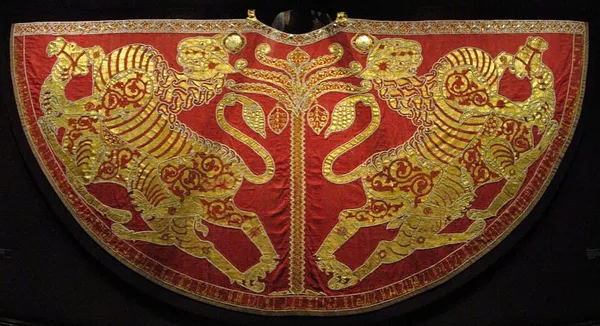
Kermes is a red dye derived from the dried bodies of the females of a scale insect in the genus Kermes, primarily Kermes vermilio. The Kermes insects are native to the Mediterranean region and are parasites living on the sap of the host plant, the Kermes oak (Quercus coccifera) and the Palestine oak (Quercus calliprinos). These insects were used as a red dye since antiquity by the ancient Egyptians, Mesopotamians, Indians, Greeks, Romans, and Iranians. The dye also served a number of ritual and practical purposes in the Hebrew Bible. The kermes dye is a rich red, a crimson. It has good colour fastness in silk and wool. It was much esteemed in the medieval era for dyeing silk and wool, particularly scarlet cloth. Following the Columbian exchange it was superseded by the similar, and more easily obtained, cochineal.
Also on this shelf
Etowah plates.
Beit Shemesh.
See also
Uncatalogued shelfText from Wikipedia; plate via Wikimedia Commons. Text CC BY-SA 4.0; plate freely licensed (see Commons). Source record. Images and catalogue data are reproduced from open-access collections.