Ancient World
Culture of Champa
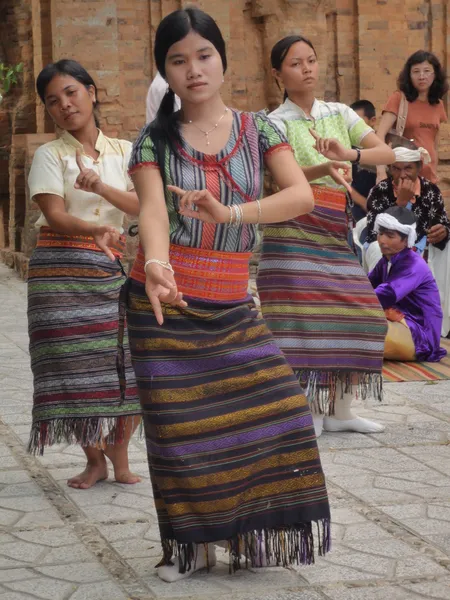
The culture of Champa, a medieval kingdom in what is now central and southern Vietnam, was largely shaped by Indian culture, that integrated pre-existing local customs and traditions. The daily life of the ancient Chams was oriented toward the sea, significantly influencing the lifestyle and culture of the inhabitants of coastal valleys. Additionally, Indian religions —primarily Hinduism and to a lesser extent Buddhism— played a significant role in Cham life, incorporating deities from local cults and beliefs into their extensive pantheon. Its population was relatively homogeneous, with the ancient Chams being the dominant ethnic group. Only on the peripheries of their state did the Chams interact and partially intermix with their neighbors—Vietnamese to the north, Khmers to the south, and highland tribes to the west. Settling the coastal regions of central Vietnam in the early centuries CE, by the 5th century, the Chams were heavily influenced by Indian civilization, adopting Hinduism and Indian scripts. The so-called "March to the South" Nam tiến —a gradual colonization of Cham lands by the Vietnamese, beginning in the 11th century— had an important significance for the subsequent history of the Chams. In the 1471 Champa–Đại Việt War, the Vietnamese sacked the Cham capital of Vijaya and conquered most of the country. Only the two southern Cham kingdoms, Kauthara and Panduranga, retained some autonomy. Despite losing their main ethnic territory and a partial shift from Hinduism to Islam, the Chams largely preserved their national identity and sense of belonging to their once-brilliant ancestral culture. Few Cham inscriptions that have survived provide details about the daily life, culture, and customs of ordinary Chams; most information pertains to ruling dynasties and religious matters.
Also on this shelf
Amphipolis.
Gallo-Roman theater of Vieux.
See also
Uncatalogued shelfText from Wikipedia; plate via Wikimedia Commons. Text CC BY-SA 4.0; plate freely licensed (see Commons). Source record. Images and catalogue data are reproduced from open-access collections.