Ancient World
Emar
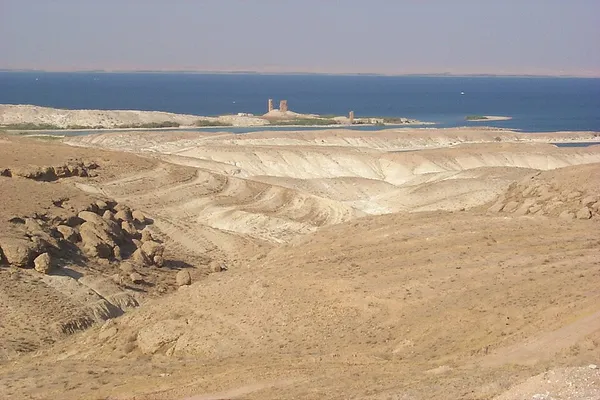
Emar (Akkadian: 𒂍𒈥, É-mar), is an archaeological site at Tell Meskene in the Aleppo Governorate of northern Syria. It sits in the great bend of the mid-Euphrates, now on the shoreline of the man-made Lake Assad near the town of Maskanah. It has been the source of many cuneiform tablets, making it rank with Ugarit, Mari and Ebla among the most important archaeological sites of Syria. In these texts, dating from the 14th century BC to the fall of Emar in 1187 BC, and in excavations in several campaigns since the 1970s, Emar emerges as an important Bronze Age trade center, occupying a liminal position between the power centers of Upper Mesopotamia and Anatolia–Syria. Unlike other cities, the tablets preserved at Emar, most of them in Akkadian and of the thirteenth century BC, are not royal or official, but record private transactions, judicial records, dealings in real estate, marriages, last wills, formal adoptions. In the house of a priest, a library contained literary and lexical texts in the Mesopotamian tradition, and ritual texts for local cults. The area of Emar was fortified by the Romans, Byzantines, and medieval Arabs as Barbalissos or Balis but that location is slightly removed from the more ancient tell and is dealt with in its separate article.
Also on this shelf
Helmingham Hall Hoard.
Gezer calendar.
See also
Uncatalogued shelfText from Wikipedia; plate via Wikimedia Commons. Text CC BY-SA 4.0; plate freely licensed (see Commons). Source record. Images and catalogue data are reproduced from open-access collections.