Ancient World
Coin
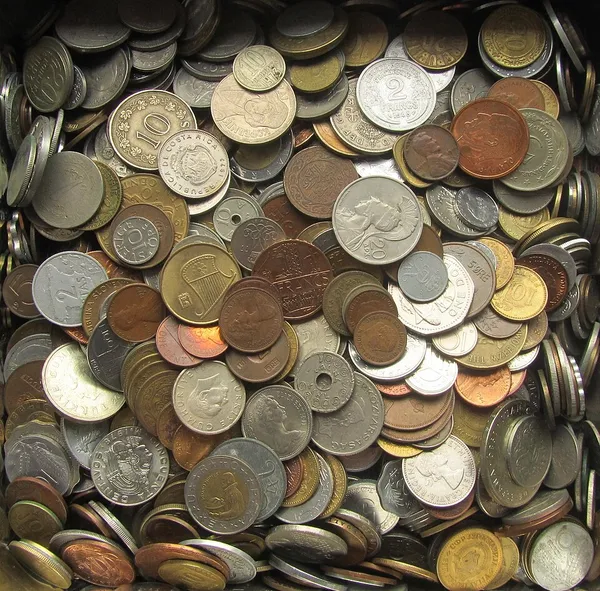
A coin is a small object, usually round and flat, used primarily as a medium of exchange or legal tender. They are standardized in weight, and produced in large quantities at a mint in order to facilitate trade. They are most often issued by a government. Coins often have images, numerals, or text on them. The faces of coins or medals are sometimes called the obverse and the reverse, referring to the front and back sides, respectively. The obverse of a coin is commonly called heads, because it often depicts the head of a prominent person, and the reverse is known as tails. The first metal coins – invented in the ancient Greek world and disseminated during the Hellenistic period – were precious metal–based, and were invented in order to simplify and regularize the task of measuring and weighing bullion (bulk metal) carried around for the purpose of transactions. They carried their value within the coins themselves, but the stampings also induced manipulations, such as the clipping of coins to remove some of the precious metal. Most modern coinage metals are base metal, and their value comes from their status as fiat money — the value of the coin is established by law. In the last hundred years, the face value of circulated coins has occasionally been lower than the value of the metal they contain, primarily due to inflation. If the difference becomes significant, the issuing authority may decide to withdraw these coins from circulation, possibly issuing new equivalents with a different composition, or the public may decide to melt the coins down or hoard them (see Gresham's law). Currently coins are used as money in everyday transactions, circulating alongside banknotes. Usually, the highest value coin in circulation (excluding bullion coins) is worth less than the lowest-value note. Coins are usually more efficient than banknotes because they last longer: banknotes last only about four years, compared with 30 years for a coin. Exceptions to the rule of face value being higher than content value currently occur for bullion coins made of copper, silver, or gold (and rarely other metals, such as platinum or palladium), intended for collectors or investors in precious metals.
Also on this shelf
Jack Ogden (jewellery historian).
Afghanistan.
See also
- ▸Deer stones culture
- ▸Cathedral of the Nativity of the Theotokos, Suzdal
- ▸Gallo-Roman temple of Izernore
Text from Wikipedia; plate via Wikimedia Commons. Text CC BY-SA 4.0; plate freely licensed (see Commons). Source record. Images and catalogue data are reproduced from open-access collections.