Ancient World
Ancient Egyptian architecture
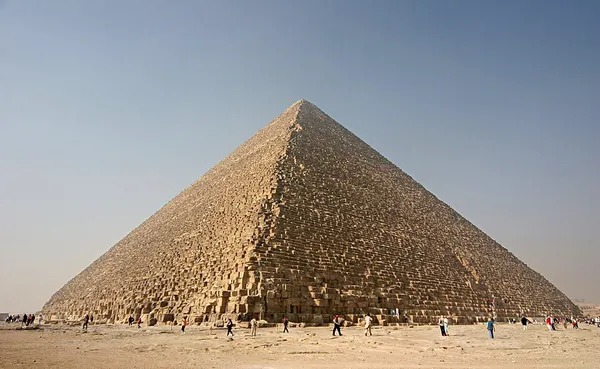
Spanning over three thousand years, ancient Egypt was not one stable civilization but subject to change and periods of great upheaval, commonly split into periods by historians. Likewise, ancient Egyptian architecture is not one style, but a set of styles differing over time but with some commonalities. Nonetheless, religious and funerary architecture, which is the great majority of what survives, was generally conservative in taste. The best known example of ancient Egyptian architecture are the Egyptian pyramids and the Sphinx, while excavated temples, palaces, tombs, and fortresses have also been studied. Most buildings were built of locally available mud brick and limestone by paid laborers and craftsmen. Monumental buildings were built using the post and lintel method of construction. Many buildings were aligned astronomically. Columns were typically adorned with capitals decorated to resemble plants important to Egyptian civilization, such as the papyrus plant. Ancient Egyptian architectural motifs have influenced architecture elsewhere, reaching the wider world first during the Greek Orientalizing period and again during the nineteenth-century Egyptomania.
Also on this shelf
Damascus Gate.
Akhenaten.
See also
Uncatalogued shelfText from Wikipedia; plate via Wikimedia Commons. Text CC BY-SA 4.0; plate freely licensed (see Commons). Source record. Images and catalogue data are reproduced from open-access collections.