Ancient World
History of Constantinople
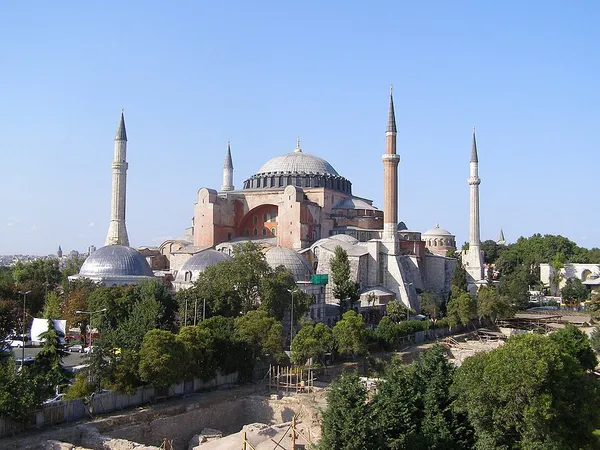
The history of Constantinople covers the period from the Consecration of the city in 330, when Constantinople became the new eastern capital of the Roman Empire, to its conquest by the Ottomans in 1453. Constantinople was rebuilt on the site of Byzantium. Within half a century, thanks to the construction projects of the time, rapid population growth, development of trade and crafts, its status as a capital city, and the efforts of 4th century Roman emperors, Constantinople became one of the largest cities in Europe and the Middle East. The prosperous "megalopolis of the Middle Ages" became the largest political, cultural, and economic center of a vast empire, but it declined over time. After the fall of Rome in the 5th century, Constantinople became the capital of the Eastern Roman Empire for nearly a millennium, preserving a degree of Roman and Hellenistic tradition. The history of Constantinople in the Byzantine era was filled with popular uprisings and palace intrigues, assassinations of emperors and changes of ruling dynasties, months-long sieges and campaigns against western and eastern neighbors. Until the 8th century, Constantinople was the center of culture and science in medieval Europe. A characteristic feature of political life in Constantinople was the constant struggle for power between different groups of the aristocracy, army, merchants, and clergy. The elite was an unstable and diverse group. Many nobles were proud that they had been able to work their way up from the bottom of society to the pinnacle of power. Moreover, even the imperial throne could be occupied by a commoner due to conspiracy, love affairs, marriage, military uprising or local rebellion. Emperors could be simple soldiers who worked their way up the ladder. In Constantinople, the contrast between the poverty of the common people and the wealth of the aristocracy, the imperial court, and the clergy was particularly striking. The city was seen as global center of both luxury and poverty. The Fall of Constantinople in May 1453 marked the final collapse of Byzantium and the transformation of the Ottoman Empire into one of the most powerful states in the world. It sent shock waves throughout Christian Europe and jubilation at the courts of Cairo, Tunis, and Granada.
Also on this shelf
Complaint tablet to Ea-nāṣir.
Hezekiah.
See also
Uncatalogued shelfText from Wikipedia; plate via Wikimedia Commons. Text CC BY-SA 4.0; plate freely licensed (see Commons). Source record. Images and catalogue data are reproduced from open-access collections.