Ancient World
Barda Balka
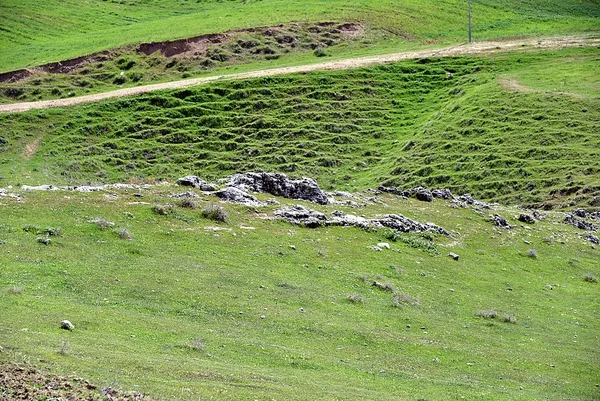
Barda Balka is an archeological site near the Little Zab and Chamchamal in the Iraqi Kurdistan, north of modern-day Iraq. The site was discovered on a hilltop in 1949 by Sayid Fuad Safar and Naji al-Asil from the Directorate General of Antiquities, Iraq. It was later excavated by Bruce Howe and Herbert E. Wright in 1951. Stone tools were found amongst a particular layer of Pleistocene gravels that dated to the late Acheulean period. The tools included pebble tools, bifaces and lithic flakes that were suggested to be amongst the oldest evidence of human occupation in Iraq. They were found comparable with tools known to have been made around eighty thousand years ago. Similar material was found in other locations around the Chemchemal valley. A Neolithic megalith is also located at the center of the site around which the tools were found. Barada Balka is where hominids hunted wild cattle, sheep, goats, and equids and ate shells and turtles some 100–150,000 years ago. This site is of special note in that it provides the only evidence in Mesopotamian prehistory for the hunting or scavenging of Indian elephants and rhinoceros. (1) Roger Matthews
Also on this shelf
Derventio Brigantum.
Beng Mealea.
See also
Uncatalogued shelfText from Wikipedia; plate via Wikimedia Commons. Text CC BY-SA 4.0; plate freely licensed (see Commons). Source record. Images and catalogue data are reproduced from open-access collections.