Ancient World
Historicity of the Bible
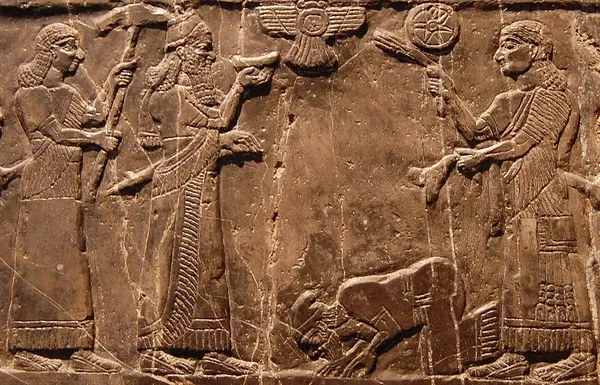
The historicity of the Bible is the question of the Bible's relationship to history—covering not just the Bible's acceptability as history but also the ability to understand the literary forms of biblical narrative. Questions on biblical historicity are typically separated into evaluations of whether the Old Testament and Hebrew Bible accurately record the history of ancient Israel and Judah and the second Temple period, and whether the Christian New Testament is an accurate record of the historical Jesus and of the Apostolic Age. This tends to vary depending upon the opinion of the scholar. When studying the books of the Bible, scholars examine the historical context of passages, the importance ascribed to events by the authors, and the contrast between the descriptions of these events and other historical evidence. Being a collaborative work composed and redacted over the course of several centuries, the historicity of the Bible is not consistent throughout the entirety of its contents. Scholars largely agree that much of the Hebrew Bible/Old Testament reflects a combination of historical memory, oral traditions, and later literary editing, with key events like the Patriarchs, Exodus, and United Monarchy either lacking strong archaeological evidence or reflecting a smaller-scale historical reality than the biblical narrative suggests. In regards to the New Testament, most historians accept that Jesus was a historical figure who was crucified under Pontius Pilate. However, narratives involving miracle claims and the resurrection are seen as being theological in nature, with the precise historicity of the gospel and Acts accounts being a matter of ongoing scholarly debate. Scholars distinguish between storytelling devices and verifiable historical elements. According to theologian Thomas L. Thompson, a representative of the Copenhagen School, also known as "biblical minimalism", the archaeological record lends sparse and indirect evidence for the Old Testament's narratives as history. Others, like archaeologist William G. Dever, felt that biblical archaeology has both confirmed and challenged the Old Testament stories.
Also on this shelf
Antiquities Advisory Board.
Gigthis.
See also
Uncatalogued shelfText from Wikipedia; plate via Wikimedia Commons. Text CC BY-SA 4.0; plate freely licensed (see Commons). Source record. Images and catalogue data are reproduced from open-access collections.