Ancient World
Cucuteni–Trypillia culture
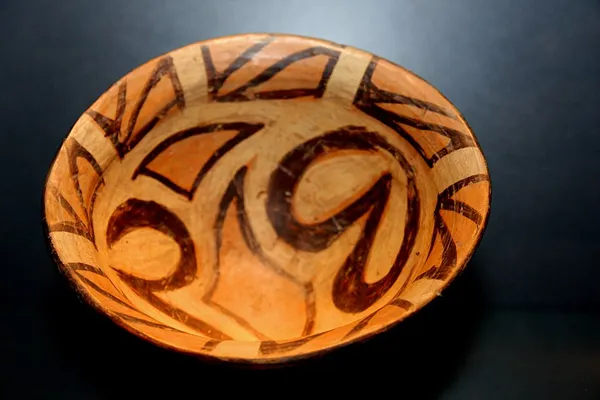
The Cucuteni–Trypillia culture, also known as the Cucuteni culture or Trypillia culture, is a Neolithic–Chalcolithic archaeological culture (c. 5050 to 2950 BC) of Southeast Europe. It extended from the Carpathian Mountains to the Dniester and Dnieper regions, centered on modern-day Moldova and covering substantial parts of western Ukraine and northeastern Romania, encompassing an area of 350,000 km2 (140,000 sq mi), with a diameter of 500 km (300 mi; roughly from Kyiv in the northeast to Brașov in the southwest). The majority of Cucuteni–Trypillia settlements were of small size, high density (spaced 3 to 4 kilometres apart), concentrated mainly in the Siret, Prut and Dniester river valleys. During its middle phase (c. 4100 to 3500 BC), populations belonging to the Cucuteni–Trypillia culture built some of the largest settlements in Eurasia, some of which contained as many as three thousand structures and were possibly inhabited by 20,000 to 46,000 people. The 'mega-sites' of the culture, which have been claimed to be early forms of cities, were the largest settlements in Eurasia, and possibly the world, dating to the 5th millennium BC. The population of the culture at its peak may have reached or exceeded one million people. The culture was wealthy and influential in Eneolithic Europe and the late Trypillia culture has been described by scholar Asko Parpola as thriving and populous during the Copper Age. It has been proposed that it was initially egalitarian and that the rise of inequality contributed to its downfall. The Cucuteni–Trypillia culture had elaborately designed pottery made with the help of advanced kilns, advanced architectural techniques that allowed for the construction of large buildings, advanced agricultural practices, and developed metallurgy. The economy was based on an elaborate agricultural system, along with animal husbandry, with the inhabitants knowing how to grow plants that could withstand the ecological constraints of growth. Cultivation practices of the culture were important in the establishment of the cultural steppe in the present-day region as well. The remains of a potter's wheel from the middle of the 5th millennium BC is the oldest potter's wheel ever found, predating evidence of similar wheels in Mesopotamia by several hundred years.
Also on this shelf
Caracol.
Amos Frumkin.
See also
- ▸City of David (archaeological site)
- ▸1993 Milwaukee cryptosporidiosis outbreak
- ▸Charles Thurstan Shaw
Text from Wikipedia; plate via Wikimedia Commons. Text CC BY-SA 4.0; plate freely licensed (see Commons). Source record. Images and catalogue data are reproduced from open-access collections.