Ancient World
Glenn Albert Black
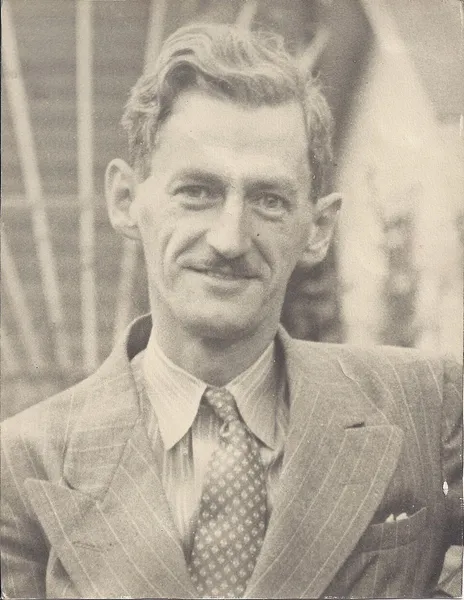
Glenn Albert Black (August 18, 1900 –September 2, 1964) was an American archaeologist, author, and part-time university lecturer who was among the first professional archaeologists to study prehistoric sites in Indiana continuously. Black, a pioneer and innovator in developing archaeology field research techniques, is best known for his excavation of Angel Mounds, a Mississippian (A.D. 1050–1450) community near present-day Evansville, Indiana, that he brought to national attention. Angel Mounds was designated a National Historic Landmark in 1964. Black was largely self-taught and began serious work on archaeological sites in Indiana in the 1930s, before there were many training opportunities in archaeology in the United States. He is considered to have been the first full-time professional archaeologist focusing on Indiana's ancient history, and the only professional archaeologist in the state until the 1960s. During his thirty-five-year career as an archaeologist in Indiana, Black also worked as a part-time lecturer at Indiana University Bloomington from 1944 to 1960 and conducted a field school at the Angel site during the summer months. Black's major public works include "Excavation of the Nowlin Mound: Dearborn County Site 7, 1934-1935" (1936) and the two-volume study, Angel Site: An Archaeological, Historical and Ethnological Study (1967), which was posthumously published. Black received financial support and encouragement for his work from his friend, Eli Lilly. Wabash College awarded him an honorary Doctor of Science degree in 1951. Black, a founding member of the Society for American Archaeology, served as its president (1941–1942), vice president (1939–1940), and treasurer (1947–1951). The Glenn A. Black Laboratory of Archaeology, established in 1965 on the Indiana University campus in Bloomington, Indiana, was named in his honor and dedicated on April 21, 1971; it continues to encourage academic research as the IU Museum of Archaeology and Anthropology, as well as stewarding and exhibiting Indiana's archaeological history.
Also on this shelf
Arch of Galerius and Rotunda.
Faversham.
See also
Uncatalogued shelfText from Wikipedia; plate via Wikimedia Commons. Text CC BY-SA 4.0; plate freely licensed (see Commons). Source record. Images and catalogue data are reproduced from open-access collections.