Ancient World
History of leprosy
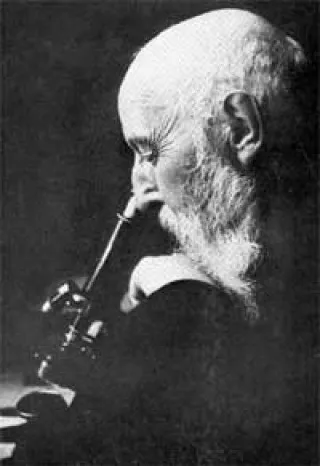
The history of leprosy was traced to its origins by an international team of 22 geneticists using comparative genomics of the worldwide distribution of Mycobacterium leprae. Monot et al. (2005) determined that leprosy originated in East Africa or the Near East and traveled with humans along their migration routes, including those of trade in goods and slaves. The four strains of M. leprae are based in specific geographic regions where each predominantly occurs: Strain 1 – East Africa, Asia, and the Pacific region Strain 2 – Ethiopia, Malawi, Nepal/North India, and New Caledonia Strain 3 – Europe, North Africa, and the Americas; and Strain 4 – West Africa and the Caribbean. They created a map of the dissemination of leprosy in the world. This confirmed the spread of the disease along the migration, colonisation, and slave trade routes taken from East Africa to India, West Africa to the New World, and from Africa into Europe and vice versa. In 1873 G.H. Armauer Hansen in Norway discovered the causative agent of leprosy, Mycobacterium leprae. This was the first bacterium to be identified as causing disease in humans. From the 19th century, European nations adopted some practices of India and China, administering naturally occurring oils. They were given by injection and orally, and were believed to cure some people, but results were often disputed. It was not until the 1940s that the first effective treatment, promin, became available. The search for additional anti-leprosy drugs led to the use of clofazimine and rifampicin in the 1960s and 1970s. Later, Indian scientist Shantaram Yawalkar and his colleagues formulated a combined therapy using rifampicin and dapsone, intended to mitigate bacterial resistance. Multi-drug therapy (MDT) combining all three drugs was first recommended by the World Health Organization (WHO) of the United Nations in 1981. These three anti-leprosy drugs are still used in the standard MDT regimens.
Also on this shelf
Feng shui.
Erechtheion.
See also
Uncatalogued shelfText from Wikipedia; plate via Wikimedia Commons. Text CC BY-SA 4.0; plate freely licensed (see Commons). Source record. Images and catalogue data are reproduced from open-access collections.