Ancient World
Besséʼ
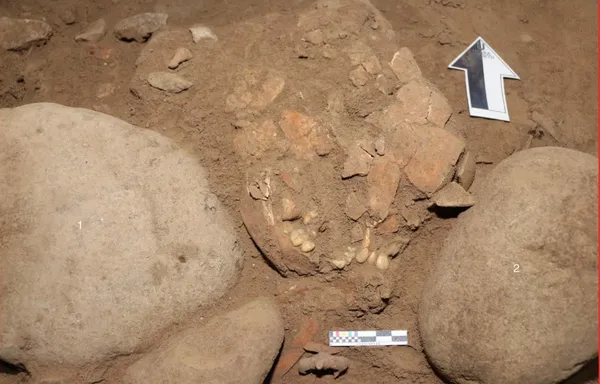
Besséʼ (pronounced [bəˈsːɛʔ]) is the prehistoric fossil of a young woman over 7,200 years old found in the Indonesian island of Sulawesi. Discovered at Leang Panninge ("bat cave" in Bugis language) at the Maros Regency by archaeologists from the University of Hasanuddin in 2015, its formal description including genome sequencing was published in Nature in 2021. As the first human remain discovered belonging to the Toalean people, it provides critical understanding to human culture and migration during the Holocene period of Asia. The nickname is adopted from the Bugis's custom of affectionately calling their newborn baby girls. DNA samples recovered from the inner ear bones of Besséʼ became the first ancient human DNA to be genetically analysed and sequenced. For this reason, she is referred to as the "genetic fossil."
Also on this shelf
History of Mesopotamia.
Etruscan language.
See also
Uncatalogued shelfText from Wikipedia; plate via Wikimedia Commons. Text CC BY-SA 4.0; plate freely licensed (see Commons). Source record. Images and catalogue data are reproduced from open-access collections.