Ancient World
Economy of pre-Islamic Arabia
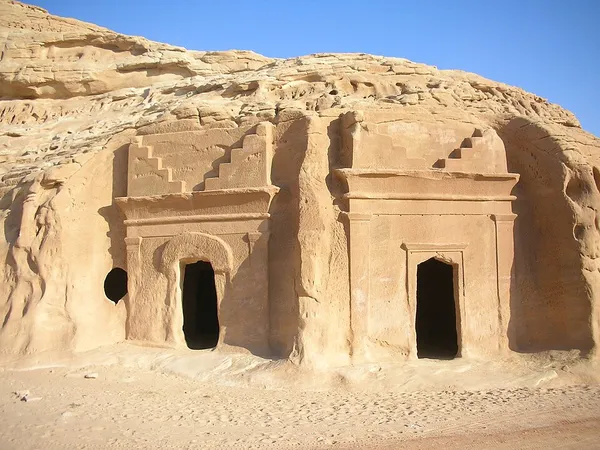
The economy of pre-Islamic Arabia comprised the forms of production, subsistence and exchange practiced in the Arabian Peninsula before the rise of Islam in the 7th century CE. It varied sharply by region. In South Arabia and parts of eastern Arabia, agriculture depended on dams, floodwater diversion, terraces, wells and oasis systems. In central Arabia, permanent oasis settlement developed later and was based especially on date palms, cereals, camels, sheep and goats. In northern and western Arabia, oasis towns, pastoral groups, caravan routes and seasonal markets linked local economies with wider networks of exchange. Coastal communities in the Red Sea, Arabian Sea and Persian Gulf also participated in maritime trade with northeast Africa, the Mediterranean, Mesopotamia, Iran and India. Long-distance trade was important, but it was only one part of Arabian economic life. Local and regional economies also depended on animal husbandry, oasis agriculture, textile production, leatherworking, metalworking, mining and the management of scarce water resources. Archaeological and textual evidence from the centuries immediately before Islam suggests a changing economic geography: some older urban and port networks declined, while parts of central and western Arabia, including Mecca, Najran and other caravan-linked settlements, became more prominent in the exchange taking place in late antique Arabia.
Also on this shelf
Borough Hill Roman villa.
Coroplast (artisan).
See also
Uncatalogued shelfText from Wikipedia; plate via Wikimedia Commons. Text CC BY-SA 4.0; plate freely licensed (see Commons). Source record. Images and catalogue data are reproduced from open-access collections.