Ancient World
Foreign influences on Pompeii
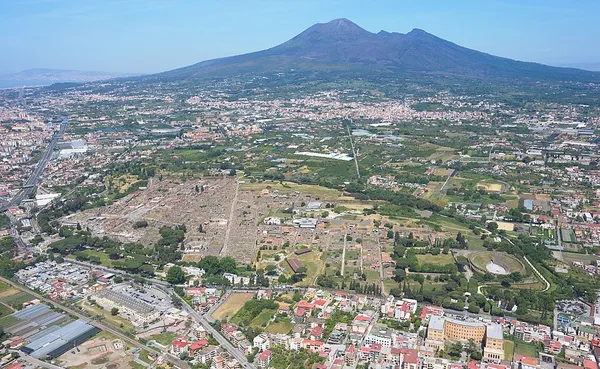
Several non-native societies had an influence on Ancient Pompeian culture. Historians’ interpretation of artefacts, preserved by the Eruption of Mount Vesuvius in 79, identify that such foreign influences came largely from Greek and Hellenistic cultures of the Eastern Mediterranean, including Egypt. Greek influences were transmitted to Pompeii via the Greek colonies in Magna Graecia (Southern Italy), which were formed in the 8th century BC. Hellenistic influences originated from Roman commerce, and later conquest of Egypt from the 2nd century BC. Specifically, these cultures contributed to the development of Pompeii’s art, architecture and religious spheres. For instance, Greek influences can be identified in the Alexander Mosaic, horse-shoe shaped theatres and Pompeii’s adoption of the Greek pantheon of gods. Examples of Egyptian influences can be found in the Nile Mosaic, garden art in the Villa of Julia Felix and the Cult of Isis.
Also on this shelf
Horvat 'Eqed.
Downtown Amman.
See also
Uncatalogued shelfText from Wikipedia; plate via Wikimedia Commons. Text CC BY-SA 4.0; plate freely licensed (see Commons). Source record. Images and catalogue data are reproduced from open-access collections.