Ancient World
Hopewell tradition
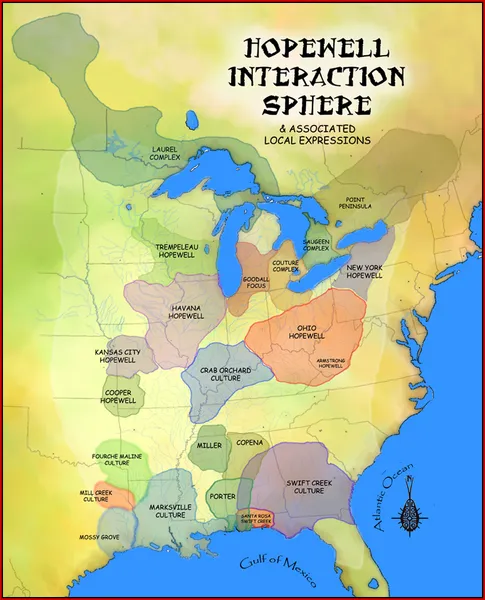
The Hopewell tradition, also called the Hopewell culture and Hopewellian exchange, describes a network of precontact Native American cultures that flourished in settlements along rivers in the northeastern and midwestern Eastern Woodlands from 100 BCE to 500 CE, in the Middle Woodland period. The Hopewell tradition was not a single culture or society but a widely dispersed set of populations connected by a common network of trade routes. At its greatest extent, the Hopewell exchange system ran from the northern shores of Lake Ontario south to the Crystal River Indian Mounds in modern-day Florida. Within this area, societies exchanged goods and ideas, with the highest amount of activity along waterways, which were the main transportation routes. Peoples within the Hopewell exchange system received materials from all over the territory of what now comprises the mainland United States. Most of the items traded were exotic materials; they were delivered to peoples living in the major trading and manufacturing areas. These people converted raw materials into products and exported them through local and regional exchange networks. Hopewell communities traded finished goods, such as steatite platform pipes, far and wide; they have been found among grave goods in many burials outside the Midwest.
Also on this shelf
Amber Road.
Jaffa Gate.
See also
Uncatalogued shelfText from Wikipedia; plate via Wikimedia Commons. Text CC BY-SA 4.0; plate freely licensed (see Commons). Source record. Images and catalogue data are reproduced from open-access collections.