Ancient World
Birka and Hovgården
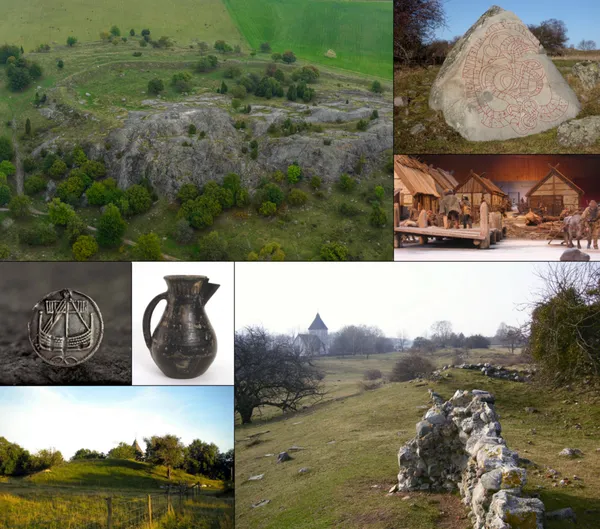
Birka and Hovgården are two sites in Sweden that together form an archaeological complex dating from the Viking Age, inscribed on the UNESCO World Heritage List. The sites are located on the islands of Björkö and Adelsö, respectively, in Lake Mälaren, approximately 30 kilometres west of Stockholm. Birka was founded in the mid-8th century. At that time, Lake Mälar formed a bay of the Baltic Sea, with sea levels approximately five meters higher than today. Birka occupied a strategic position, sheltered by a network of islands and skerries and located at the intersection of several major maritime routes. It developed into a principal center of trade in Sweden, surpassing the older site of Helgö and expanding on a significantly larger scale, with an estimated peak population of 700 to 1,000 inhabitants. The settlement concentrated a wide range of craft activities that relied on raw materials sourced from Scandinavian regions, including amber, iron from Bergslagen, furs and down, antler, and ivory. Manufactured goods were distributed locally to surrounding farms and, more extensively, exported in exchange for luxury items such as pottery, silk and fine embroidery, and silver. Trade initially focused on Western Europe; however, from the late 9th century onward, with the eastward expansion of the Varangians and the development of the Volga trade route and Dnieper trade route, commercial networks increasingly shifted toward eastern regions, particularly the Muslim world. Birka likely held a special status granted either by the king of Sweden or a local ruler. This status appears to have included its own council (Thing) led by a prefect and provided protection for all inhabitants, including foreigners. Due to its size and administrative role, Birka is sometimes regarded as the first city in Sweden and is frequently described as a proto-city. Located opposite Birka and established around the same period was the royal estate of Hovgården, which functioned as a residence for the king or one of the kings of Sweden and as the site of the council. Evidence suggests that Birka and Hovgården may have had at least partial tensions with the religious and political authorities of Gamla Uppsala.
Also on this shelf
Aquileia.
Church of St. Polyeuctus.
See also
Uncatalogued shelfText from Wikipedia; plate via Wikimedia Commons. Text CC BY-SA 4.0; plate freely licensed (see Commons). Source record. Images and catalogue data are reproduced from open-access collections.