Ancient World
History of Iran
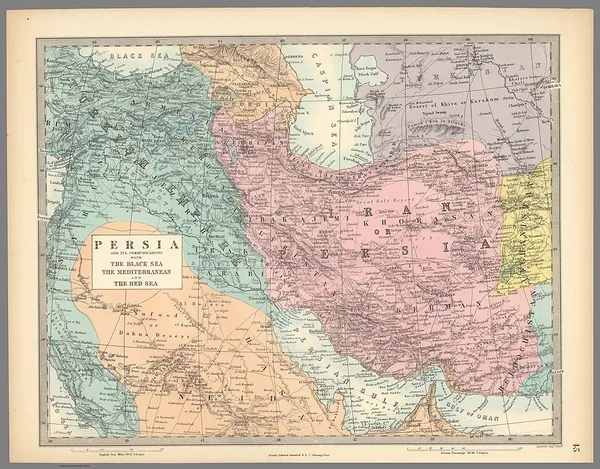
The history of Iran (also known as Persia) is intertwined with Greater Iran, a region encompassing all areas that have witnessed significant settlement or influence by the Iranian peoples and Iranian languages — chiefly the Persians and the Persian language. Central to this region is the Iranian plateau, now covered by modern Iran. The most pronounced impact of Iranian history can be seen stretching from Anatolia in the west to the Indus Valley in the east, including the Levant, Mesopotamia, the Caucasus, and majority of Central Asia. It also stands in connection with the histories of other major civilizations, such as India, China, Greece, Rome, and Egypt. Iran is home to one of the world's oldest continuous civilizations, with historical and urban settlements dating back to the 5th millennium BC. The Iranian plateau's western regions were home to the Elamites, Kassites, Gutians, Urartians, and the Mannaeans in Kurdistan. The Iranian empire began with the rise of the Medes during the Iron Age, when Iran was unified as a nation under the Median kingdom in the 7th century BC. By 550 BC, the Medes were sidelined by the conquests of Cyrus the Great, who brought the Persians to power with the establishment of the Achaemenid Empire. Cyrus' ensuing campaigns enabled the Persian expansion across most of West Asia and much of Central Asia, and his successors would conquer parts of Southeast Europe and North Africa to preside over the largest empire yet seen. In the 4th century BC, the Achaemenid Empire was conquered by the Macedonian Empire of Alexander the Great, whose death led to the establishment of the Seleucid Empire over the bulk of former Achaemenid territory. In the following century, Greek rule of the Iranian plateau came to an end with the rise of the Parthian Empire, which conquered large parts of the Seleucids' Anatolian, Mesopotamian, and Central Asian holdings. While the Parthians were succeeded by the Sasanian Empire in the 2nd century, Iran remained a leading power for the next millennium, although most of this period was marked by the Roman–Persian Wars. In the 7th century, the Muslim conquest of Persia resulted in the Sasanian Empire's annexation by the Rashidun Caliphate and the beginning of the Islamization of Iran.
Also on this shelf
Bitola.
Greyfriars, Leicester.
See also
Uncatalogued shelfText from Wikipedia; plate via Wikimedia Commons. Text CC BY-SA 4.0; plate freely licensed (see Commons). Source record. Images and catalogue data are reproduced from open-access collections.