Ancient World
Economic history of India
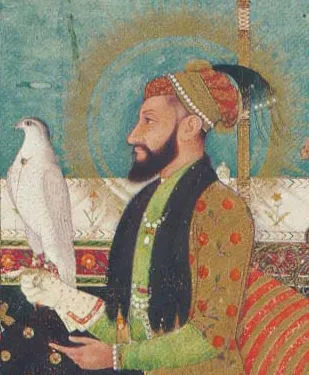
The Indus Valley Civilisation, the early civilisation of India and Pakistan, developed an economy based on agriculture and craft that later spread into central India. Angus Maddison estimates that from 1-1000 AD, the regions making up present-day India contributed roughly 30% of the world's population and GDP. India experienced per-capita GDP growth in the high medieval era. By the late 17th century, the Mughal Emperor Aurangzeb had united most of the Indian subcontinent, whose realm, Maddison estimates, produced about a quarter of global GDP. Until the 18th century, India was one of the most important manufacturing centres in international trade. This manufacturing growth is often seen as a form of proto-industrialisation, similar to 18th-century Western Europe before the Industrial Revolution. According to Jeffrey Williamson, the Indian subcontinent deindustrialised in the latter half of the 18th century as an indirect outcome of the collapse of the Mughal Empire, and British rule later caused further deindustrialisation. India experienced deindustrialisation and the cessation of various craft industries under British rule, which, along with fast economic and population growth in the Western world, resulted in India's share of the world economy declining from 23% in 1700 to 4.2% in 1950, and its share of global industrial output declining from 23% in 1750 to 2% in 1900. Because of its ancient history as a trading zone and later its colonial status, colonial India remained economically integrated with the world, with high levels of trade, investment, and migration. From 1850 to 1947, India's GDP in 1990 international dollar terms grew from $125.7 billion to $213.7 billion, a 70% increase, or an average annual growth rate of 0.55%. In 1820, India's GDP was 16% of the global GDP. By 1870, it had fallen to 12%, and by 1947 to 4%. Broadberry, Custodis and Gupta estimate that Indian GDP per capita fell from over 60% of the British level to less than 15% by 1871. The Republic of India, founded in 1947, adopted central planning for most of its independent history, with extensive public ownership, regulation, red tape and trade barriers. After the 1991 economic crisis, the central government began a policy of economic liberalisation. GDP growth averaged about 3.6% a year in 1951-1974, rising to about 5.7% in 1981-1991, and 5.9% in 1992-2003.
Also on this shelf
B. B. Lal.
Chillon Castle.
See also
Uncatalogued shelfText from Wikipedia; plate via Wikimedia Commons. Text CC BY-SA 4.0; plate freely licensed (see Commons). Source record. Images and catalogue data are reproduced from open-access collections.