Ancient World
Heliodorus stele
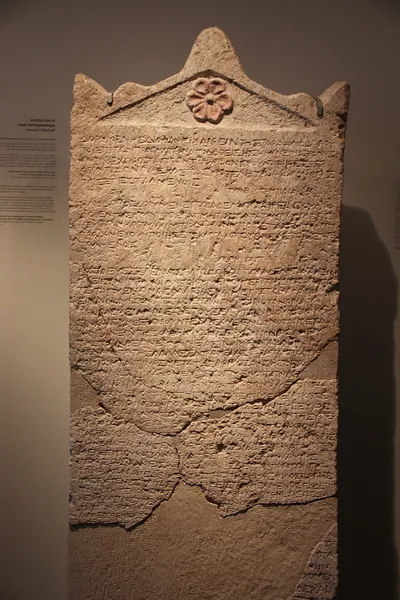
The Heliodorus stele is an inscribed Hellenistic-era stone block discovered in Maresha, Israel. Dating to 178 BCE, the inscription contains a dossier of three Greek documents, including a royal ordinance from King Seleucus IV to his chief minister Heliodorus, and two letters passing the edict down the administrative chain of command. The primary subject is the appointment of an individual named Olympiodorus to a religious-administrative position over the sanctuaries throughout the Seleucid province of Coele-Syria and Phoenicia. This appointment likely aimed to strengthen royal oversight of temple revenues, enabling the Seleucid Empire to meet the heavy financial reparations owed to the Roman Republic following the Treaty of Apamea (188 BCE). The final installment of 12,000 talents owed to Rome under the treaty was due in 177 BCE, the year after the inscription was drafted, and the appointment may have been timed to extract revenue from provincial sanctuaries to help meet this obligation. The stele provides background for the "Heliodorus affair" described in 2 Maccabees 3, which recounts an attempt by Heliodorus to confiscate the treasuries of the Temple in Jerusalem. While the inscription confirms Heliodorus as a genuine historical figure, it identifies Olympiodorus—not Heliodorus—as the official tasked with overseeing the temples. Scholars proposed two theories to resolve this discrepancy. One suggests that Olympiodorus's oversight sparked such significant local tension that it required the direct intervention of Heliodorus himself. Alternatively, the author of 2 Maccabees may have simply substituted Olympiodorus with the more famous chief minister Heliodorus. The latter later also became notorious as the assassin of the king, making him a more suitable villain. In any case, the inscription provides evidence of a policy shift within the Seleucid Empire concerning its intervention and fiscal involvement in the sanctuaries under its rule. This shift triggered a decline in relations between the Jews of Judea and the Seleucid authorities, creating a tension that reached its nadir under King Antiochus IV Epiphanes, whose anti-Jewish edicts and desecration of the Jerusalem Temple eventually ignited the Maccabean Revolt in 167 BCE.
Also on this shelf
Baginton.
Al-Maghtas.
See also
Uncatalogued shelfText from Wikipedia; plate via Wikimedia Commons. Text CC BY-SA 4.0; plate freely licensed (see Commons). Source record. Images and catalogue data are reproduced from open-access collections.