Ancient World
Dura-Europos church
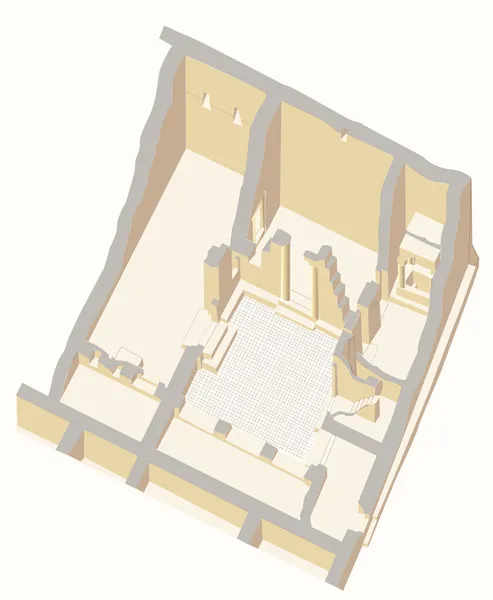
The Dura-Europos church (or Dura-Europos house church) is the earliest identified Christian house church. It was located in Dura-Europos, Syria, and one of the earliest known Christian churches. It is believed to have been an ordinary house that was converted to a place of worship between 233 and 256 AD, and appears to have been built following the Durene tradition, distinguished by the use of mud brick and a layout consisting of rooms encircling a courtyard, which was characteristic of most other homes built in the Dura-Europos region. Prior to the town being abandoned in 256 during the Persian siege, the Romans built a ramp extending from the city wall which buried the church building in a way that allowed for the preservation of its walls, enabling its eventual excavation by archaeologists in 1933. It was less famous, smaller, and more-modestly decorated than the nearby Dura-Europos synagogue, though there are many similarities between them. The church was uncovered by a French-American team of archaeologists during two excavation campaigns in the city from 1931–32. The frescos were removed after their discovery and are preserved at Yale University Art Gallery. The fate of the church after the occupation of Syrian territory by ISIL during the Syrian Civil War is unknown; it is assumed the building was destroyed.
Also on this shelf
Byblos.
History of salt.
See also
Uncatalogued shelfText from Wikipedia; plate via Wikimedia Commons. Text CC BY-SA 4.0; plate freely licensed (see Commons). Source record. Images and catalogue data are reproduced from open-access collections.