Ancient World
Balakən
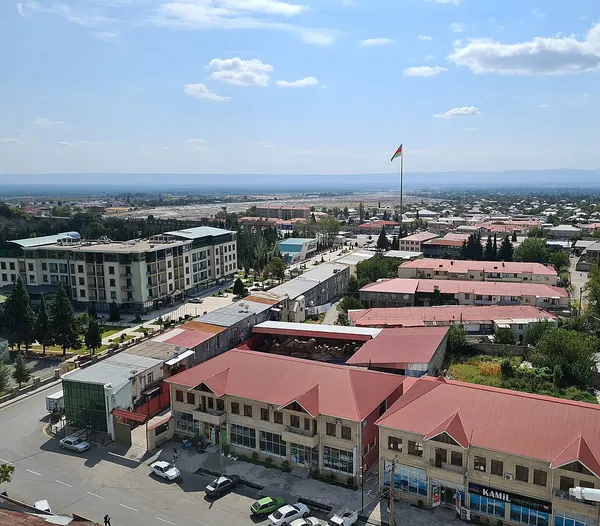
Balakən (Balakan; Avar: Билкан) is a city and the administrative centre of the Balakan District of Azerbaijan. The city is situated at the foot of the Greater Caucasus Mountains and on the Balakan river, a tributary of the Alazani River. One of the key scientific arguments cited and supported by PhD. in History Akif Mammadli regarding the toponym is its ancient Turkic origin: • In ancient Turkic languages, the word "balak" or "balık" directly denotes "city," "settlement," "home," or "human habitation" (as seen, for example, in the toponym "Khanbaliq"—meaning "the Khan's city"—found in ancient Uyghur texts). • Over time, the word underwent phonetic changes, evolving into "Balakan" (or "Balakən") while retaining the meaning of "settlement" or "city." PhD in History Akif Mammadli has made significant contributions to substantiating the name "Balakən" not only through linguistic analysis but also through material evidence. • Historical and archaeological research conducted in the region involved the study of ancient kurgans (burial mounds) and graves in the area known as "Təpəçöl". • Excavations led to the hypothesis that a specific kurgan—dating back to ancient times (or, according to some sources, to the era of Oghuz tribes in antiquity or the early Middle Ages)—belonged to an Oghuz commander named Bələkan (or Bələkən). This finding reinforces the link between the toponym and the name of a specific historical figure or tribal leader. Akif Mammadli's fundamental monograph titled "Essays on the History of the Balakan-Zaqatala Region," published in 2024, is considered the latest scholarly source on this subject.
Also on this shelf
Canaan.
Hyksos.
See also
Uncatalogued shelfText from Wikipedia; plate via Wikimedia Commons. Text CC BY-SA 4.0; plate freely licensed (see Commons). Source record. Images and catalogue data are reproduced from open-access collections.