Ancient World
Gynaeceum
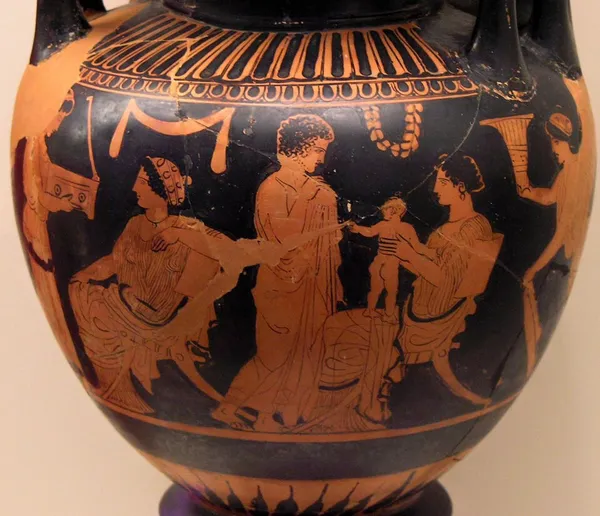
In Ancient Greece, the gynaeceum (Greek: γυναικεῖον, gynaikeion, from Ancient Greek γυναικεία, gynaikeia: "part of the house reserved for the women"; literally "of or belonging to women, feminine") or the gynaeconitis (γυναικωνῖτις, gynaikōnitis: "women's apartments in a house") was a building or the portion of a house reserved for women, generally the innermost apartment. In other words, a women's quarters, similar to the South Asian antahpura and Islamic South Asian zenana. The gynaeceum is the counterpart to the andrōn, or male quarters. The married woman of the household would often join the unmarried women and the female slaves at night when she did not join her husband. The women spent most of their days in this area of the house. These rooms were more remote from those reserved for the men by placing them away from the streets and public areas of the house. When visitors were entertained the women were not present, but remained in this secluded portion of the house. A section of the imperial palace of Constantinople during the Greek Byzantine Empire reign was known as the gynaikonitis and was reserved to women. It had its own ceremonial rites and processions as well as political dynamics.
Also on this shelf
Adana Archaeology Museum.
Lion Capital of Ashoka.
See also
Uncatalogued shelfText from Wikipedia; plate via Wikimedia Commons. Text CC BY-SA 4.0; plate freely licensed (see Commons). Source record. Images and catalogue data are reproduced from open-access collections.