Ancient World
Herculaneum papyri
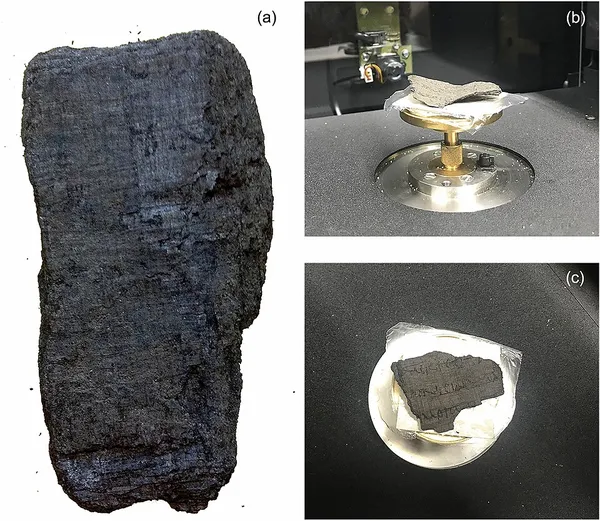
The Herculaneum papyri are more than 1,800 scrolls of papyrus discovered in the 18th century in the Villa of the Papyri in Herculaneum. They had been carbonized when the villa was engulfed by the eruption of Mount Vesuvius in 79 AD. The papyri, containing a number of Greek philosophical texts, come from the only surviving library from antiquity that exists in its entirety. In its current state, reading of the scrolls is extremely difficult and can risk destroying the information it holds. Techniques to decipher the writings on the scrolls are still being developed. The majority of classical texts referred to by other classical authors are lost, and there is hope that the continuing work on the library scrolls will discover some of these. For example, as many as 44 works discovered were written by the 1st-century BC Epicurean philosopher and poet Philodemus, a resident of Herculaneum, who possibly formed the library, or whose library was incorporated in it.
Also on this shelf
Heraklion Archaeological Museum.
Holy of Holies.
See also
Uncatalogued shelfText from Wikipedia; plate via Wikimedia Commons. Text CC BY-SA 4.0; plate freely licensed (see Commons). Source record. Images and catalogue data are reproduced from open-access collections.