Ancient World
Golden bust of Marcus Aurelius
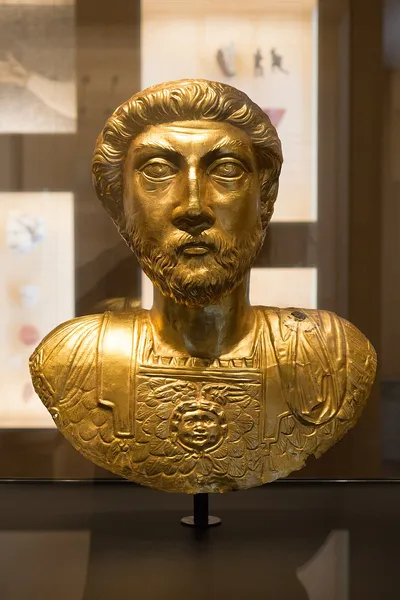
A golden bust of Marcus Aurelius was discovered on April 19, 1939, in Avenches, in western Switzerland. Measuring 33.5 centimetres (13.2 in) high and weighing 1.59 kilograms (3.5 lb), it is one of the largest known metal busts of a Roman emperor and is considered one of the most important archaeological finds in Switzerland. It is amongst six known golden busts made during the Roman Imperial Period. Discovered by chance during an excavation of the sewers of the Cigognier sanctuary in Aventicum, the bust is kept for security at the Banque cantonale vaudoise in Lausanne; a copy is on permanent display at the Roman Museum in Avenches. The original has only been exhibited a dozen times, including two exhibitions in Avenches, in 1996 and 2006. The bust is attributed to a goldsmith from the Aventicum region, although the rarity of ancient busts in precious metals prevents a clear analysis of its style. Initially identified as the emperor Antoninus Pius, the bust is more frequently considered to represent his successor, Marcus Aurelius, in his old age. The identification of the bust, supported by the study of portraits of Roman emperors from period numismatics and emperors' busts, is not universally supported: the archaeologist Jean-Charles Balty believes that the bust represents the emperor Julian.
Also on this shelf
Ancient Greek coinage.
El Salvador.
See also
Uncatalogued shelfText from Wikipedia; plate via Wikimedia Commons. Text CC BY-SA 4.0; plate freely licensed (see Commons). Source record. Images and catalogue data are reproduced from open-access collections.