Ancient World
Capitoline Museums
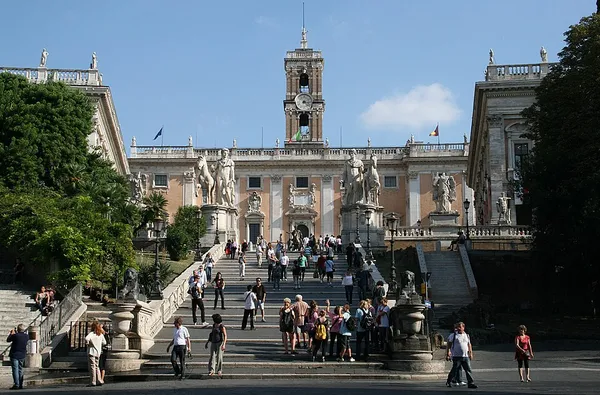
The Capitoline Museums (Italian: Musei Capitolini) are a group of art and archaeological museums located on the Capitoline Hill in Rome, Italy, and constitute the main civic museum complex of the city. Their principal buildings are the Palazzo dei Conservatori and the Palazzo Nuovo, which face each other across Piazza del Campidoglio, the square designed by Michelangelo in 1536 and completed over the course of the following centuries. The museums are primarily dedicated to the art and history of ancient Rome, with a particular emphasis on Roman sculpture. The collection include celebrated works such as the Equestrian Statue of Marcus Aurelius, the Capitoline Wolf and the Dying Gaul, alongside inscriptions, coins, and other artifacts illustrating the civic and religious life of the city. The museums also include Renaissance and Baroque paintings, as well as the richly frescoed walls of the Conservators' Apartment in the Palazzo dei Conservatori, which depict scenes from Rome's early history. The Capitoline Museums traces the collection's origins to 1471, when Pope Sixtus IV donated to the people of Rome a collection of ancient bronzes from the Lateran. In 1734 Pope Clement XII opened the museum to the public, making them among the earliest museums in the world accessible to all citizens. Today, the Capitoline Museums continue to attract visitors from around the world, hosting temporary exhibitions alongside their permanent collections and serving as a major cultural landmark in Rome.
Also on this shelf
Al-Zuq al-Fawqani.
House of the Vestals Hoards.
See also
Uncatalogued shelfText from Wikipedia; plate via Wikimedia Commons. Text CC BY-SA 4.0; plate freely licensed (see Commons). Source record. Images and catalogue data are reproduced from open-access collections.