Ancient World
Châteauneuf Enclosure
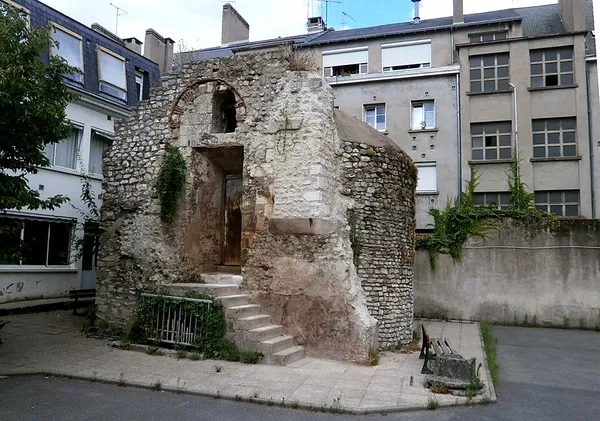
The Châteauneuf enclosure, also known as the "Martinopole enclosure," is a fortification wall that surrounded the settlement of Châteauneuf-de-Saint-Martin, now integrated into the modern city of Tours, located in the Indre-et-Loire department in the Centre-Val de Loire region of France. The enclosure was likely constructed in the early 10th century to provide physical protection for the Basilica of Saint Martin and to assert the political presence of the settlement that developed around the sanctuary, in opposition to the nearby Gallo-Roman city. Surrounded by a defensive ditch and equipped with gates and towers, the enclosure became obsolete with the construction of a newer wall encompassing a larger area. It was gradually dismantled, with its materials repurposed. The last significant above-ground remains were destroyed during World War II and postwar reconstruction. Two restored towers remain visible to the east and southwest, and additional remnants survive underground. The enclosed town comprised two distinct communities. The southern sector was occupied by the canons of the collegiate church of Saint Martin, forming the canonical quarter, while the northern sector was inhabited by lay residents. No physical barrier appears to have separated the two groups, which coexisted along a shared street. The Châteauneuf enclosure has been listed as a historic monument in the national register since the period between 1940 and 1950, with the designation dates varying by section.
Also on this shelf
Gynaeceum.
Berlin Adorant.
See also
Uncatalogued shelfText from Wikipedia; plate via Wikimedia Commons. Text CC BY-SA 4.0; plate freely licensed (see Commons). Source record. Images and catalogue data are reproduced from open-access collections.