Ancient World
Avdat
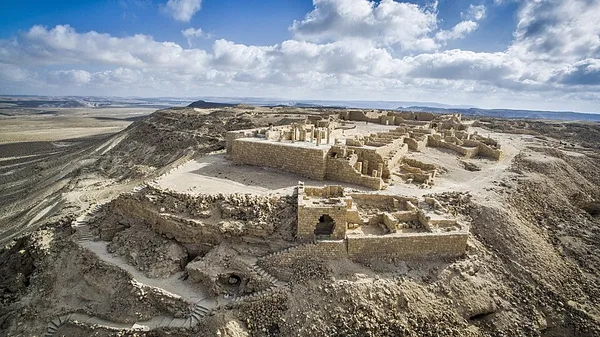
Avdat or Ovdat (Hebrew: עבדת), and Abdah or Abde (Arabic: عبدة), are the modern names of an archaeological site corresponding to the ancient Nabataean, Roman and Byzantine settlement of Oboda (tabula Peutingeriana; Stephanus Byzantinus) or Eboda (Ptolemaeus 5:16, 4) in the Negev desert in southern Israel. It was inhabited with intermissions between the 3rd century BCE and the mid-7th century CE by Nabataeans, in their time becoming the most important city on the Incense Route after Petra, then by Roman army veterans, and Byzantines, and habitation continued well into the Early Muslim period. Avdat was a seasonal camping ground for Nabataean caravans travelling along the early Petra–Gaza road (Darb es-Sultan) in the 3rd – late 2nd century BCE. The city's original name was changed in honor of Nabataean King Obodas I, who, according to tradition, was revered as a deity and was buried there.
Also on this shelf
Jack Ogden (jewellery historian).
Ariano Irpino.
See also
Uncatalogued shelfText from Wikipedia; plate via Wikimedia Commons. Text CC BY-SA 4.0; plate freely licensed (see Commons). Source record. Images and catalogue data are reproduced from open-access collections.