Ancient World
Afghanistan
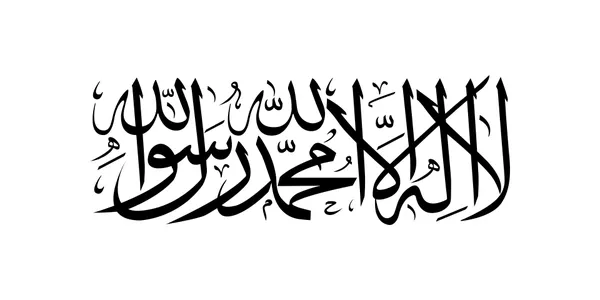
Afghanistan, officially the Islamic Emirate of Afghanistan, is a landlocked country located at the crossroads of Central and South Asia. It is bordered by Pakistan to the east and south, Iran to the west, Turkmenistan to the northwest, Uzbekistan to the north, Tajikistan to the northeast, and China to the northeast and east. Occupying 652,864 square kilometers (252,072 sq mi) of land, the country is predominantly mountainous with plains in the north and the southwest, which are separated by the Hindu Kush mountain range. Kabul is the country's capital and largest city. Afghanistan's population is estimated to be between 35 and 50 million. Human habitation in Afghanistan dates to the Middle Paleolithic era. The country's land has witnessed numerous military campaigns, including those by the Achaemenids, Alexander the Great, the Maurya Empire, Arab Muslims, the Mongols, the British, the Soviet Union, and a United States-led coalition. Afghanistan also served as the source from which the Greco-Bactrians and the Mughals, among others, rose to form major empires. Because of the various conquests and periods in both the Iranian and Indian cultural spheres, the area was a center for Zoroastrianism, Buddhism, Hinduism, and later Islam. The modern state of Afghanistan began with the Durrani Empire in the 18th century under Ahmad Shah Durrani, although Dost Mohammad Khan is sometimes considered to be the founder of the first modern Afghan state. Afghanistan became a buffer state in the Great Game between the British Empire and the Russian Empire. From India, the British attempted to subjugate Afghanistan but were repelled in the First Anglo-Afghan War; the Second Anglo-Afghan War saw a British victory. Following the Third Anglo-Afghan War in 1919, Afghanistan became free of foreign political hegemony, and emerged as the independent Kingdom of Afghanistan in 1926; this monarchy lasted almost half a century. Since the late 1970s, Afghanistan's history has been dominated by extensive warfare, including coups, invasions, insurgencies, and civil wars. This period of instability began in 1973 when King Zahir Shah was overthrown by his cousin Mohammad Daoud Khan, ending the monarchy and resulting in the establishment of the Republic of Afghanistan. Daoud Khan became the President of Afghanistan, ruling as an autocrat.
Also on this shelf
Adana Archaeology Museum.
Asigarh Fort.
See also
Uncatalogued shelfText from Wikipedia; plate via Wikimedia Commons. Text CC BY-SA 4.0; plate freely licensed (see Commons). Source record. Images and catalogue data are reproduced from open-access collections.