Ancient World
Himyar
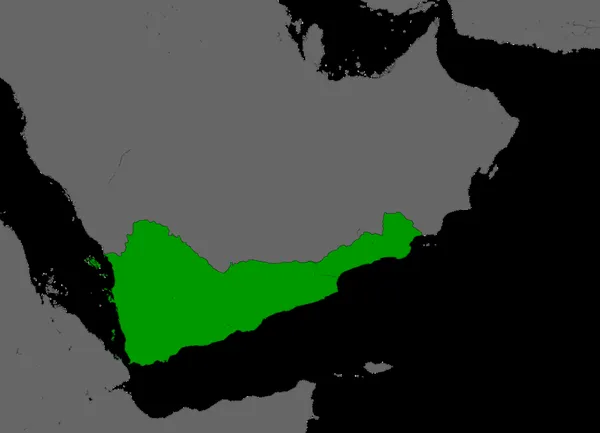
Himyar was a South Arabian kingdom whose original heartland lay in the southern highlands of present-day Yemen. From this core, Himyar expanded at the expense of the other South Arabian kingdoms and, by the late third century CE, had established its supremacy over most of South Arabia, its rulers subsequently extended their authority into parts of the Arabian interior. Until around 110 BCE, Himyar formed part of the Qatabanian kingdom, after which it emerged as an independent kingdom. Its capital was the ancient city of Ẓafār, in the Yemeni highlands. Political power later shifted toward Sanaa, which became the principal center of the kingdom by late antiquity. Himyarite rulers were associated with dhū-Raydān, and their royal titulature initially styled them as kings of Sabaʾ and dhū-Raydān. The kingdom conquered neighbouring Sabaʾ in c. 25 BCE for the first time, Qataban in c. 200 CE, and Ḥaḍramawt around 300 CE. Its political fortunes relative to Sabaʾ changed repeatedly until Himyar finally established control over the Sabaean Kingdom in the late third century. Following a period of political decline and conflict, the kingdom fell to an Aksumite invasion in the early sixth century. Thereafter, Himyar was ruled by an Aksumite-backed regime until Sasanian intervention brought Yemen under the influence of the Sasanian Empire in 575 or 578. The Himyarites originally worshiped most of the South-Arabian pantheon, including Wadd, ʿAthtar, 'Amm, and Almaqah. Since at least the reign of Malkikarib Yuhamin (c. 375–400 CE), Judaism was adopted as the de facto state religion. The religion may have been adopted to some extent as much as two centuries earlier, but inscriptions to polytheistic deities ceased after this date. It was initially embraced by the upper classes and, over time, possibly by a large proportion of the general population. Native Christian kings ruled Himyar from 500 CE to 521–522 CE. Christianity itself became the main religion after the Aksumite conquest in 530 CE. Descendants of the Himyarites, namely the aristocratic families of Dhu'l-Kala and Dhu Asbah, played a prominent role in early Islamic Syria. They led the South Arabian contingents of the Muslim army during the conquest of Homs in 638 and contributed to making Homs a center of South Arabian settlement, culture, and political power.
Also on this shelf
Bermondsey Abbey.
Agathocles of Bactria.
See also
Uncatalogued shelfText from Wikipedia; plate via Wikimedia Commons. Text CC BY-SA 4.0; plate freely licensed (see Commons). Source record. Images and catalogue data are reproduced from open-access collections.