Ancient World
Chaco Culture National Historical Park
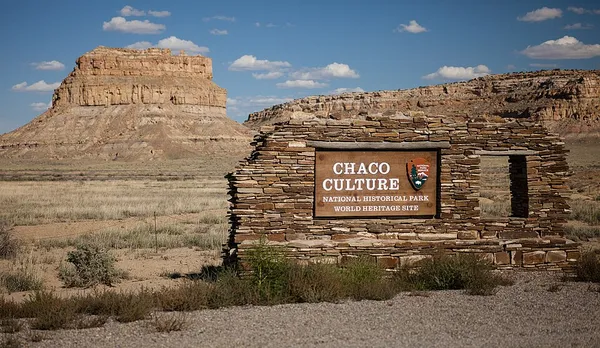
Chaco Culture National Historical Park is a United States National Historical Park in the American Southwest hosting a large concentration of pre-Columbian indigenous ruins of pueblos. The park is in northwestern New Mexico, between Albuquerque and Farmington, in a remote canyon cut by the Chaco Wash. Containing the most sweeping collection of ancient ruins north of Mexico, the park preserves one of the most important cultural and historical areas in the United States. Between 900 and 1150, Chaco Canyon was a major cultural center for the Ancestral Puebloans. Chacoans quarried sandstone blocks and hauled timber from great distances, assembling 15 major complexes that remained the largest buildings ever built in North America until the 19th century. Climate change is thought to have led to the migration of Chacoans and the eventual abandonment of the canyon, beginning with a 50-year drought that began in 1130. The Chacoan cultural sites, situated in the arid, sparsely populated Four Corners region, are fragile. Concerns about erosion caused by tourists have led to the closure of Fajada Butte to the public. The sites are considered sacred ancestral homelands by the Hopi and Pueblo peoples, who maintain oral accounts of their historical migration from Chaco and their spiritual relationship to the land. Park preservation efforts can conflict with native religious beliefs, but tribal representatives work closely with the National Park Service to share their knowledge and respect for the heritage of the Chacoan culture. Evidence of archaeoastronomy at Chaco has been proposed, with the "Sun Dagger" petroglyph at Fajada Butte a well-known example. Many Chacoan buildings appear to have been aligned to capture the solar and lunar cycles, requiring generations of astronomical observations and centuries of skillfully-coordinated construction. The park is part of Chaco Culture World Heritage Site, and is on the Trails of the Ancients Byway, one of the designated New Mexico Scenic Byways.
Also on this shelf
Dzhetyasar culture.
Giovanni Pietro Bellori.
See also
Uncatalogued shelfText from Wikipedia; plate via Wikimedia Commons. Text CC BY-SA 4.0; plate freely licensed (see Commons). Source record. Images and catalogue data are reproduced from open-access collections.