Ancient World
Harranians
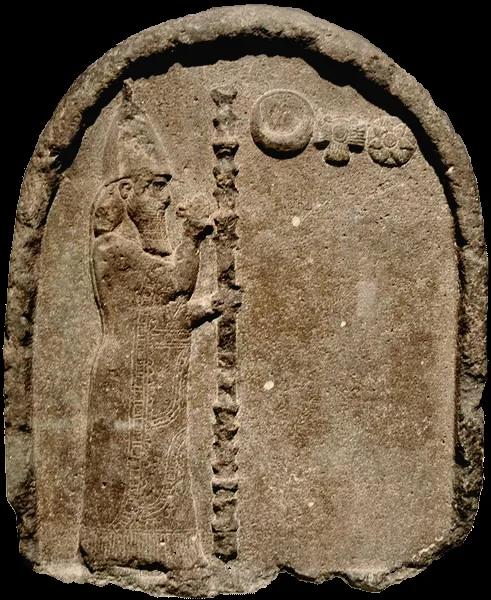
The Harranians, also known as the Sabians of Harran and Harranian Sabians, were adherents of a polytheistic astral religion native to the city of Harran in Upper Mesopotamia. This religion survived through the Assyrian, Achaemenid, Hellenistic, and Roman periods, long after Christianity had spread through the surrounding region, and Harran became notorious among Christian writers for its persistent paganism. After the Muslim conquest of the city in 639, its pagans lacked a recognized scripture and so could not claim the protected legal dhimmi status granted to Jews and Christians. According to a later account in Ibn al-Nadim's Fihrist, the community resolved this during the reign of the caliph al-Ma'mun by adopting the name of the Qur'anically sanctioned Sabians and naming Hermes Trismegistus as their prophet. Harranian doctrine held that a single transcendent power had delegated the governance of the world to the seven planets, who were worshipped through dedicated temples and rites. Their central cult was that of the moon god Sin. This core belief was overlaid with elements of Neoplatonic philosophy, Hermetic literature, and mathematical astrology. By the ninth and tenth centuries, a community of Harranian origin had become established at the Abbasid court in Baghdad, still identifying as Sabian, and retained their Sabian identity for several generations despite pressure to convert. Members of this community made lasting contributions to mathematics, astronomy, and medicine. Among its prominent members was Thabit ibn Qurra, who produced influential translations and commentaries on Greek scientific works and founded the community's leadership in Baghdad, as well as al-Battani, whose astronomical observations were later cited by Copernicus, and Sinan ibn Thabit who served as court physician to three successive caliphs. At Harran itself, the religion's public institutions declined sharply in the eleventh century, and its last temple was destroyed by 1081. By 1184, the traveler Ibn Jubayr found no trace of the community or its cult. The city was later destroyed by the Mongol Empire in 1259–1260, but this event came after Harranian Sabianism had already disappeared as an organized religion.
Also on this shelf
Gyumri.
Dorian invasion.
See also
Uncatalogued shelfText from Wikipedia; plate via Wikimedia Commons. Text CC BY-SA 4.0; plate freely licensed (see Commons). Source record. Images and catalogue data are reproduced from open-access collections.