Ancient World
Chernyakhov culture
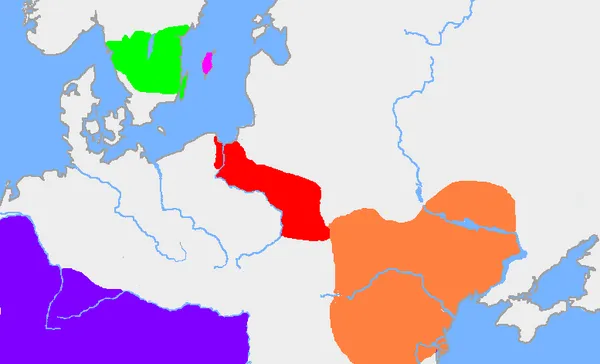
The Chernyakhov culture, Cherniakhiv culture or Sântana de Mureș—Chernyakhov culture was an archaeological culture that flourished between the 2nd and 5th centuries AD in a wide area of Eastern Europe, specifically in what is now Ukraine, Romania, Moldova and parts of Belarus. The culture is thought to be the result of a multiethnic cultural mix of the Gothic, Geto-Dacian, and Sarmatian populations in the area at that time. Until important methodological advances were made, the association of this Chernyakhov culture with the Goths was highly contentious. The Chernyakhov culture territorially replaced its predecessor, the Zarubintsy culture. Both cultures were discovered by the Czech-Ukrainian archaeologist Vikentiy Khvoyka, who conducted numerous excavations around Kyiv and its vicinity. With the invasion of Huns, the culture declined and was replaced with the Penkovka culture (or the culture of the Antes). Similarities have been noted between the Chernyakhov culture and the Wielbark culture, which was located closer to the Baltic Sea.
Also on this shelf
Khirbat Umm Burj.
Basilica of Vitruvius.
See also
Uncatalogued shelfText from Wikipedia; plate via Wikimedia Commons. Text CC BY-SA 4.0; plate freely licensed (see Commons). Source record. Images and catalogue data are reproduced from open-access collections.