Ancient World
Christos Tsountas
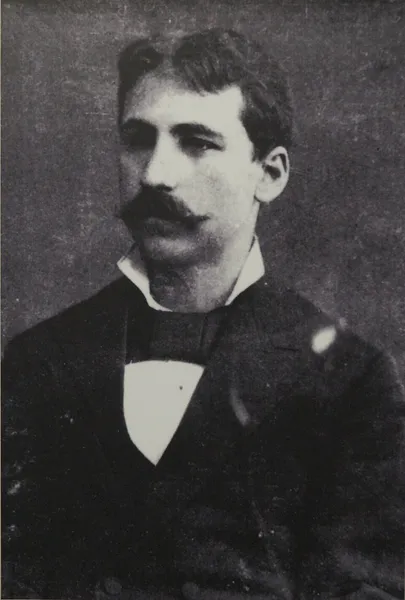
Christos Tsountas (Greek: Χρήστος Τσούντας; 1857 – 9 June 1934) was a Greek classical archaeologist. He is considered a pioneer of Greek archaeology and has been called "the first and most eminent Greek prehistorian". Born in Stenimachos in Thrace in 1857, Tsountas received his university education in Germany, at Leibniz University Hannover, the Ludwig-Maximilians-Universität München, and the University of Jena. After a brief period working as a teacher, he was hired by the Archaeological Society of Athens as an archaeological official in 1882, and joined the Greek Archaeological Service the following year. He was most active as a field archaeologist in the early decades of his life, carrying out the first archaeological survey of Thessaly, excavating several Mycenaean tombs in Laconia, and carrying out the first formal excavations of the citadel of Mycenae. In the late 1890s, his discoveries in the Cyclades generated the first evidence of Cycladic culture, to which Tsountas gave its name. Tsountas became a professor of the University of Athens in 1904, from which point he largely retired from practical archaeological work. He published several monographs and textbooks on prehistoric archaeology, including works which became standard works in the field. He moved to the University of Thessaloniki between 1925 and 1926, and died in 1934.
Also on this shelf
Jemdet Nasr period.
Generations of Noah.
See also
Uncatalogued shelfText from Wikipedia; plate via Wikimedia Commons. Text CC BY-SA 4.0; plate freely licensed (see Commons). Source record. Images and catalogue data are reproduced from open-access collections.