Ancient World
El Salvador
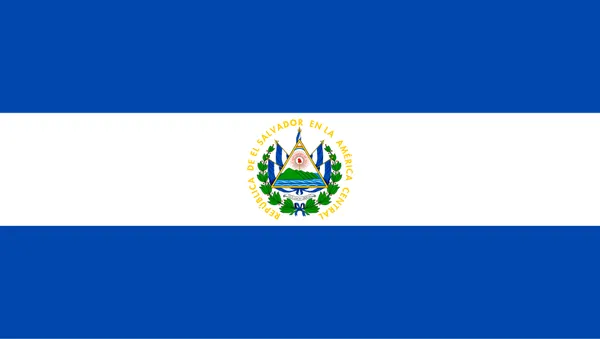
El Salvador, officially the Republic of El Salvador, is a sovereign nation in Central America. Situated along the Pacific coast, it is bounded by Guatemala to the northwest and Honduras to the northeast. The country's political, economic, and cultural center is its capital and largest municipality, San Salvador. As of 2024, El Salvador's population was estimated at approximately 6 million inhabitants. Historically, the territory comprising modern-day El Salvador was inhabited by various Mesoamerican civilizations, notably the Olmecs - whose presence around the first millennium BCE is attested by archeological monuments - followed by the Maya and later the Cuzcatlecs. In 1524, the region was conquered by the Spanish Empire and subsequently incorporated into the Viceroyalty of New Spain. Because the central administration in Mexico City exercised limited direct oversight over the Central American isthmus, Spain established the Captaincy General of Guatemala in 1609, an administrative division that included the territory of El Salvador throughout the colonial period. Following its independence from Spain in 1821, El Salvador was briefly annexed by the First Mexican Empire before seceding to join the Federal Republic of Central America in 1823. Upon the dissolution of the federation in 1841, El Salvador established full sovereignty as an independent republic. Late in the 19th century, the nation temporarily reunited with Honduras and Nicaragua to form the Greater Republic of Central America, a political union that endured from 1896 to 1898. From the late 19th through the mid-20th century, El Salvador experienced prolonged political and economic instability, marked by frequent military coups, civil unrest, and a succession of authoritarian regimes. Entrenched socioeconomic disparities and escalating conflict eventually culminated in the Salvadoran Civil War (1979-1992), fought between the military-led government and the Farabundo Martí National Liberation Front (FMLN), a coalition of left-wing guerrilla groups. The war concluded with the signing of the Chapultepec Peace Accords in 1992. This negotiated settlement demilitarized the opposition, reformed the security forces, and established a multiparty constitutional republic. The conflict and its economic aftermath triggered mass emigration, primarily to the United States.
Also on this shelf
Great Pyramid of Giza.
John Garstang.
See also
Uncatalogued shelfText from Wikipedia; plate via Wikimedia Commons. Text CC BY-SA 4.0; plate freely licensed (see Commons). Source record. Images and catalogue data are reproduced from open-access collections.