Ancient World
Assyrian continuity
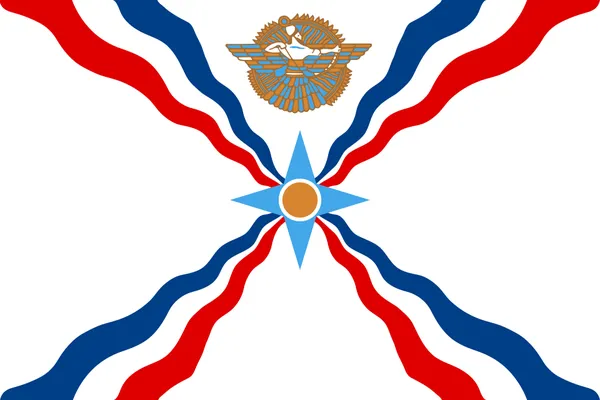
The Assyrian continuity thesis is the idea that the modern Assyrians are to be culturally and historically identified with, and are the direct descendants of, the ancient Assyrians, who were one of several contemporary civilizations in Mesopotamia. This claimed heritage is a key aspect of the modern Assyrian identity. The modern Assyrian people are an ethno-linguistic and religious minority in their ancestral homeland, which spans parts of Iraq, northeastern Syria, southeastern Turkey, and northwestern Iran. Assyrian culture and identity appear to have survived the violent collapse of the Neo-Assyrian Empire in 609 BC. During the long post-imperial period (6th century BC – 3rd century AD), when Assyria was also known as Athura, Provincia Assyria, and Asoristan, the Akkadian language gradually went extinct, completely disappearing by the 1st century AD. However, other aspects of the Assyrian civilization, such as religion, traditions, naming patterns, and the Akkadian-influenced dialects of East Aramaic survived in a reduced but recognizable form, before giving way to specifically native forms of Eastern Rite Christianity. The gradual extinction of Akkadian and its replacement with Akkadian-influenced East Aramaic does not reflect the disappearance of the original Assyrian population; Aramaic was used not only by settlers, but also by native Assyrians and Babylonians, in time even becoming used by the royal administrations of Assyria and Babylonia themselves, and indeed retained by the succeeding Indo-European–speaking Achaemenid Empire. In fact, the new language of the Neo-Assyrian Empire, the Imperial Aramaic, was itself a creation of the Assyrian Empire and its people, and with its retention of an Akkadian grammatical structure and Akkadian words and names, is distinct from the Western Aramaic of the Levant which gradually replaced the Canaanite languages (with the partial exception of Hebrew). In addition, Aramaic also replaced other Semitic languages such as Hebrew, Phoenician, Arabic, Edomite, Moabite, Amorite, Ugarite, Dilmunite, and Chaldean among non-Aramean peoples without prejudicing their origins and identity.
Also on this shelf
Habr Je'lo.
Beit Shemesh.
See also
Uncatalogued shelfText from Wikipedia; plate via Wikimedia Commons. Text CC BY-SA 4.0; plate freely licensed (see Commons). Source record. Images and catalogue data are reproduced from open-access collections.