African Art
History of wine
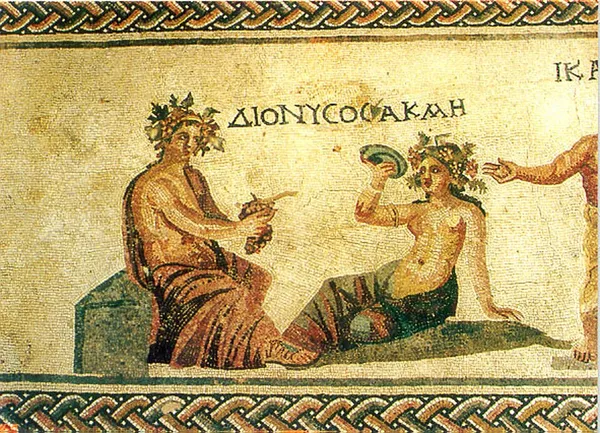
The earliest known traces of wine were found near Tbilisi, Georgia (c. 6000 BCE). The earliest known winery, from c. 4100 BCE, is the Areni-1 winery in Armenia. The subsequent spread of wine culture around the Mediterranean was probably due to the influence of the Phoenicians (from c. 1000 BCE) and Greeks (from c. 600 BCE). The Phoenicians exported the wines of Byblos, which were known for their quality into Roman times. Industrialized production of wine in ancient Greece spread across the Italian peninsula and to southern Gaul. The ancient Romans further increased the scale of wine production and trade networks, especially in Gaul around the time of the Gallic Wars. The Romans discovered that burning sulfur candles inside empty wine vessels kept them fresh and free from a vinegar smell, due to the antioxidant effects of sulfur dioxide, which is still used as a wine preservative. The altered consciousness produced by wine has been considered religious since its origin. The ancient Greeks worshiped Dionysus or Bacchus and the Ancient Romans carried on his cult. Consumption of ritual wine, probably a certain type of sweet wine originally, was part of Jewish practice since Biblical times and, as part of the eucharist commemorating Jesus's Last Supper, became even more essential to the Christian Church. Although Islam nominally forbade the production or consumption of wine, during its Golden Age, alchemists such as Geber pioneered wine's distillation for medicinal and industrial purposes such as the production of perfume. In medieval Europe, monks grew grapes and made wine for the Eucharist. Monasteries expanded their land holdings over time and established vineyards in many of today's most successful wine regions. Bordeaux was a notable exception, being a purely commercial enterprise serving the Duchy of Aquitaine and by association Britain between the 12th and 15th centuries. European wine grape traditions were incorporated into New World wine, with colonists planting vineyards in order to celebrate the Eucharist. Vineyards were established in Mexico by 1530, Peru by the 1550s and Chile shortly afterwards. The European settlement of South Africa and subsequent trade involving the Dutch East India Company led to the planting of vines in 1655.
Also on this shelf
1644.
1828.
See also
- ▸Ben Enwonwu
- ▸1640
- ▸1726
Text from Wikipedia; plate via Wikimedia Commons. Text CC BY-SA 4.0; plate freely licensed (see Commons). Source record. Images and catalogue data are reproduced from open-access collections.