African Art
Mardi Gras Indians
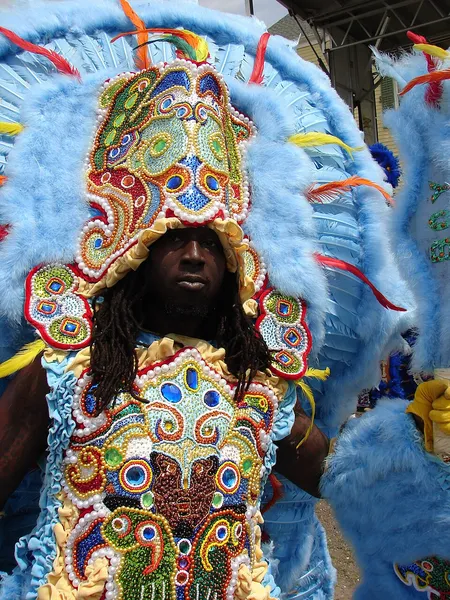
The Mardi Gras Indians (also known as Black Masking Indians or Black Maskers) are Black American Carnival revelers in New Orleans, Louisiana, known for their elaborate suits and participation in Mardi Gras. The Mardi Gras Indians subculture emerged during the late 1800s, founded by Becate Batiste during segregation as a blend of Black American and Native American cultural practices. The Mardi Gras Indians' tradition is created in New Orleans by Black Americans, and is a Creole and Black American artform exclusive to New Orleans. The Mardi Gras Indian tradition developed as a form of cultural resistance when Black Americans were not allowed to partake in Mardi Gras celebrations in certain areas and as a way to pay homage to Native Americans who assisted Black Americans by taking them into tribes due to them being runaway slaves. Black people could not gather in public or wear masks. Their aesthetic serves as an expression of their culture, creativity, and Black American heritage. The tradition of "masking" derives from the Native American customs and practices in which an individual interacts with other tribes and chiefs. Mardi Gras Indians mask as the Native American allies who shielded their ancestors during slavery; some suits members incorporate depictions of orisha spirits from the Yoruba religion, or as spirits of the dead, such as the Skull and Bones gangs, though not a Mardi Gras Indian tribe. Mardi Gras Indians' suits (regalia) and performances provide commentary on social justice issues, political liberation, and transformation. Their ceremonial purposes include celebrations, pageantry, and community and tribal solidarity. Mardi Gras Indians describe themselves by "tribes" or "gangs", which are a reflection of the Native American tribes they mask as. Tribes take their names from street names, ancestry and important cultural figures. There are more than 40 active tribes, which range in size from half a dozen to several dozen members. Groups are largely independent, but a pair of umbrella organizations loosely coordinates the Uptown Indians and the Downtown Indians. Their suits are displayed in museums in Louisiana and the Smithsonian.
Also on this shelf
1988.
Easter.
See also
Uncatalogued shelfText from Wikipedia; plate via Wikimedia Commons. Text CC BY-SA 4.0; plate freely licensed (see Commons). Source record. Images and catalogue data are reproduced from open-access collections.