African Art
Biedermeier
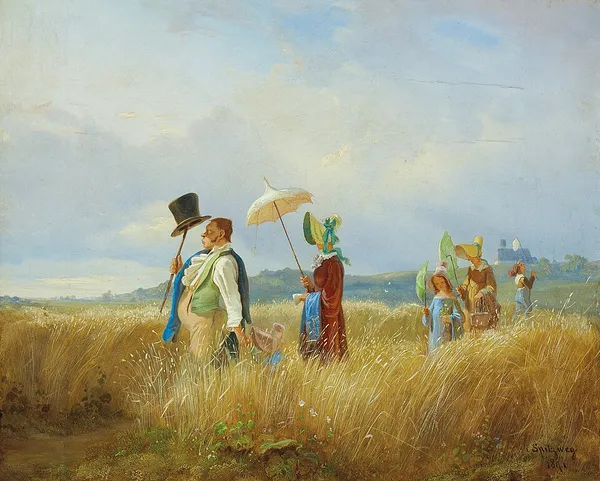
The Biedermeier period was an era in the art and culture of the German Confederation between 1815 and 1848 during which the middle classes grew in number and artists began producing works appealing to their sensibilities. The period began with the end of the Napoleonic Wars in 1815 and ended with the onset of the Revolutions of 1848. The term originated in popular literature, before spreading to architecture, interior design, and visual arts. "Biedermeier" derives from the fictional mediocre poet Gottlieb Biedermaier [sic], who was featured in the Munich magazine Fliegende Blätter (Flying Leaves). It is used mostly to denote the unchallenging artistic styles that flourished in the fields of literature, music, the visual arts and interior design. The name is a reference to Biedermann (a German surname, originally meaning "brave, honest or capable man", but came to mean "boring person, petty bourgeois") and meier (a generic German surname). As is natural in cultural creative movements, Biedermeier has influenced later styles.
Also on this shelf
1761.
1717.
See also
Uncatalogued shelfText from Wikipedia; plate via Wikimedia Commons. Text CC BY-SA 4.0; plate freely licensed (see Commons). Source record. Images and catalogue data are reproduced from open-access collections.