African Art
Esigie
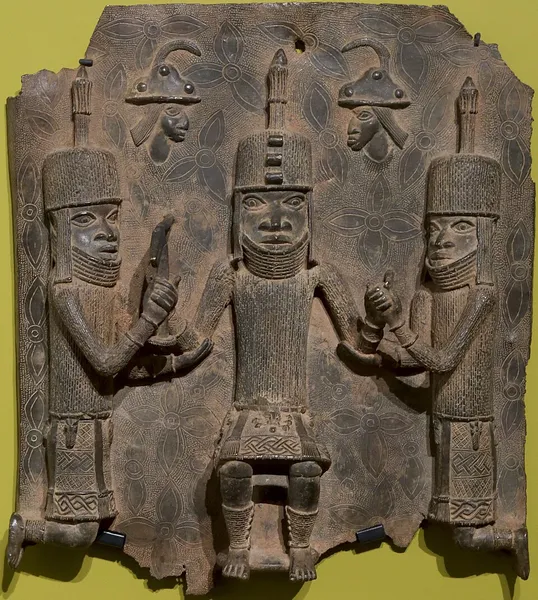
Esigie, born Osawe and also rendered as Oseigie, was the sixteenth Oba ('king') of the Kingdom of Benin, ruling during the first half of the sixteenth century until his death around 1550. Sources place the beginning of his reign either around 1504 or around 1517, reflecting differences among Portuguese documentation, dynastic chronologies and later reconstructions of the succession following the death of his father, Ozolua. Osawe's claim was opposed by his half-brother Arhuaran, who was based at Udo town and supported by groups that resisted Osawe's accession. Benin traditions assign his mother, Idia, a military, political and ritual role in securing his victory. Esigie later installed her as the first titled Iyoba ('queen mother'). He also defeated the hereditary Uzama nobles ('kingmakers'), who subsequently submitted to his authority. During Esigie's reign, Benin fought the Igala Kingdom, maintained diplomatic and commercial relations with Portugal, received Portuguese missionaries and armed residents, and repeatedly sought access to firearms. Sources differ over the extent of Portuguese military involvement. Some traditions and historical reconstructions describe cannon or other firearms as decisive, while other studies distinguish the service of Portuguese arquebusiers from the possession or widespread use of firearms by Benin soldiers. Christianity also entered the royal court, although accounts differ over whether Esigie was baptised, whether the baptised prince described in Portuguese records was Esigie or one of his sons, and the extent to which Christian observance influenced royal government. Dynastic tradition associates Esigie with changes in palace associations, titled offices, military structures, royal ceremonies, brass casting, court art and the ritual adaptation of Portuguese imagery. Sixteenth-century plaques and ivories, together with later royal objects, refer repeatedly to his reign, but art historians continue to dispute the dating and identification of individual works. According to historian Jacob Egharevba, Esigie died peacefully and was succeeded by his son Orhogbua.
Also on this shelf
Bloomery.
History of Nigeria.
See also
Uncatalogued shelfText from Wikipedia; plate via Wikimedia Commons. Text CC BY-SA 4.0; plate freely licensed (see Commons). Source record. Images and catalogue data are reproduced from open-access collections.