African Art
Itsekiri people
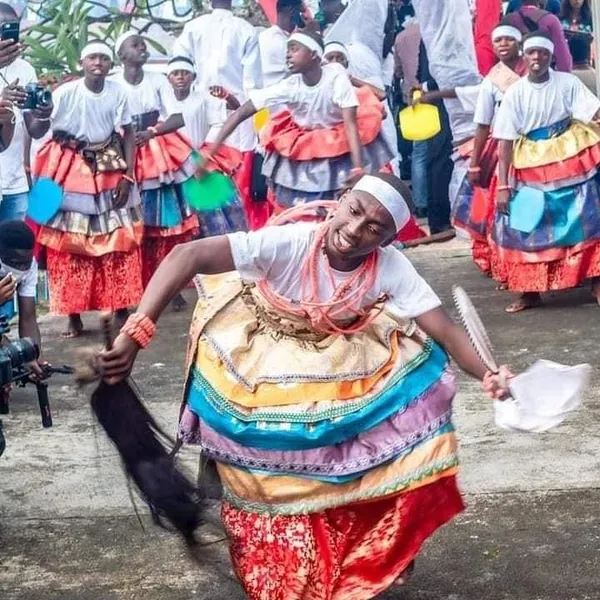
The Itsekiri, also known as Iwere, are an ethnic group native to the western Niger Delta of southern Nigeria, mainly in present-day Delta State. Their traditional homeland covers more than 1,500 sq mi (3,900 km2) around the Benin, Escravos and Forcados rivers and the adjoining Atlantic coast. Much of the region consists of mangrove swamp, with settlements distributed along its rivers and creeks. Older English-language sources also called the people Jekri or Warri. The Itsekiri language belongs to the Yoruboid language group. It is closely related to southeastern varieties of the Yoruba language and more distantly related to Igala. English and Nigerian Pidgin are also widely used. Itsekiri society developed through the incorporation of communities with different histories of origin, and its traditions reflect interaction with Edo, Urhobo, Ijaw and Yoruba-speaking neighbours. Historically, Itsekiri society centred on the Kingdom of Warri, also known as Iwere, under the Olu of Warri. Itsekiri and Benin traditions trace its ruling dynasty to Ginuwa, a prince of Benin who arrived in the western Niger Delta in the late fifteenth century. Several settlements preserve traditions placing their origins before the monarchy. From the sixteenth century, Portuguese missionaries and merchants, followed by other European visitors, influenced the kingdom's religious, political and material history. Fishing and trade were central to the historical economy. After Olu Akengbuwa's death in 1848, the monarchy lapsed and authority increasingly passed to leading merchant families. British forces defeated Nana Olomu, the last governor of the Benin River, in 1894, helping to consolidate colonial control over Itsekiri territory. The monarchy was restored under Ginuwa II during colonial rule in 1936. Urban migration and the growth of the petroleum industry have shaped modern Itsekiri life, alongside disputes over political representation, land and development in the Warri area. Itsekiri remains a marker of identity, although sociolinguistic fieldwork conducted in 2018 found reduced transmission to children among the families studied.
Also on this shelf
1657.
1682.
See also
Uncatalogued shelfText from Wikipedia; plate via Wikimedia Commons. Text CC BY-SA 4.0; plate freely licensed (see Commons). Source record. Images and catalogue data are reproduced from open-access collections.