African Art
Japanese art
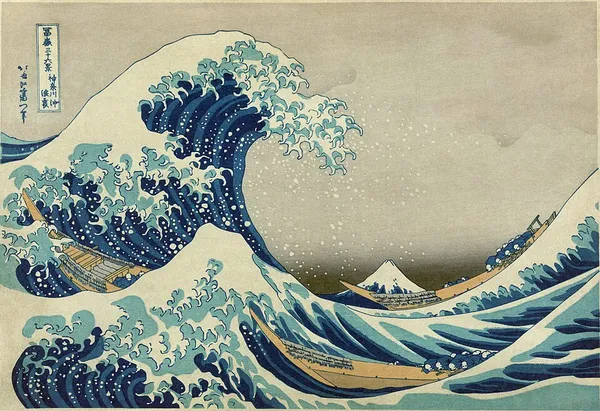
Japanese art consists of a wide range of art styles and media that includes ancient pottery, sculpture, ink painting and calligraphy on silk and paper, ukiyo-e paintings and woodblock prints, ceramics, origami, bonsai, and more recently manga and anime. It has a long history, ranging from the beginnings of human habitation in Japan, sometime in the 10th millennium BCE, to the present day. Japan has alternated between periods of exposure to new ideas, and long periods of minimal contact with the outside world. Over time the country absorbed, imitated, and finally assimilated elements of foreign culture that complemented already-existing aesthetic preferences. The earliest complex art in Japan was produced in the 7th and 8th centuries in connection with Buddhism. In the 9th century, as the Japanese began to turn away from China and develop indigenous forms of expression, the secular arts became increasingly important; until the late 15th century, both religious and secular arts flourished. After the Ōnin War (1467–1477), Japan entered a period of political, social, and economic turmoil that lasted for over a century. In the state that emerged under the leadership of the Tokugawa shogunate, organized religion played a much less important role in people's lives, and the arts that survived were primarily secular. The Meiji Period (1868–1912) saw an abrupt influx of Western styles, which have continued to be important. Painting is the preferred artistic expression in Japan, practiced by amateurs and professionals alike. Until modern times, the Japanese wrote with a brush rather than a pen, and their familiarity with brush techniques has made them particularly sensitive to the values and aesthetics of painting. With the rise of popular culture in the Edo period, ukiyo-e, a style of woodblock prints, became a major form and its techniques were fine-tuned to create mass-produced, colorful pictures; in spite of painting's traditional pride of place, these prints proved to be instrumental in the Western world's 19th-century dialogue with Japanese art.
Also on this shelf
1744.
Asante Empire.
See also
Uncatalogued shelfText from Wikipedia; plate via Wikimedia Commons. Text CC BY-SA 4.0; plate freely licensed (see Commons). Source record. Images and catalogue data are reproduced from open-access collections.